投稿者: itochan_story

  • Ito-chan’s Story — Chapter Two, Episode Three

    What the Doctor Told Us About Her Condition

    🇯🇵Read in Japanese

    Throughout my pregnancy, the doctors had told us the same thing again and again.

    “We’ll know more once she is born.”

    There was only so much they could tell from an ultrasound, and although we already knew that her bones were shorter than expected and that there was a strong possibility of an underlying condition, no one could tell us exactly how severe her symptoms would be, how well she would be able to breathe on her own, whether she could see or hear, or what kind of treatment she might need after birth.

    So somewhere inside me, I think I had come to believe that once she was born, we would finally know.

    I imagined that when January 5 arrived and our daughter entered the world, the long period of uncertainty we had lived through during the pregnancy would finally come to an end and, whether the answers were good or bad, we would at least have answers.

    But when she was actually born, I realized that it didn’t work that way.

    Her birth did not suddenly reveal everything we had been waiting to know; instead, it made new examinations possible for the first time, and every result seemed to lead to another question, another test, another piece of her body and her future that we still needed to understand.

    In the NICU, one of the doctors prepared a single A4 sheet of paper and used it to explain our daughter’s condition to us.

    On that sheet was the long name we had already heard many times during the pregnancy—

    congenital spondyloepiphyseal dysplasia.

    Along with the name of the condition, the doctor had organized what they currently knew about our daughter, what might happen as she grew, and what kinds of examinations and treatments could become necessary.

    The doctor did not say,

    “There is absolutely no doubt. This is the diagnosis.”

    But after considering the examinations performed after birth together with the characteristics of her body, we were told that they believed it was almost certainly congenital spondyloepiphyseal dysplasia.

    It was not a new name to us.

    We had heard it many times during the pregnancy, I had searched for information about it myself, and I thought I had already prepared myself for the possibility that this would be her diagnosis.

    And yet, seeing those words written on a piece of paper in front of me, knowing that everything on that page was describing the little girl now sleeping in the NICU, made the same diagnosis feel completely different.

    The doctor went through the page slowly, explaining each part to us.

    We were told that as our daughter grew, she was likely to have short stature, and because we had been told throughout the pregnancy that her long bones were shorter than expected, this was something we had already begun to prepare ourselves for.

    If she was small but healthy, I thought, then perhaps being small could simply become one part of who she was.

    That was something I felt I could learn to accept.

    But after she was born, we learned that her height was only one part of the story.

    From the moment she entered the world, breathing on her own had not been easy for her, and depending on how her condition developed, we were told that she might need respiratory support to help her breathe.

    As the doctor explained this, I kept thinking about the tiny movement of her chest that I had watched so many times in the NICU.

    A small rise.

    A fall.

    And then another rise.

    Breathing was something I had gone through my entire life without thinking about, something so automatic that I had never considered it an achievement at all, and yet from the day she was born, my daughter had been working so hard simply to keep doing it.

    For the first time in my life, I began to understand that even something as basic as taking a breath was never something we should assume would come easily.

    There were still questions about her eyes as well.

    At that point, we did not know how much she could see, and the doctors explained that we would need to continue examining her vision as she grew.

    The same was true of her hearing.

    We did not yet know how much she could hear, and because hearing loss could occur with this condition, it was something that would need to be monitored carefully over time.

    Whenever I looked at her face, I noticed those big eyes of hers and remembered how my husband and I had laughed at one of her ultrasound pictures during the pregnancy.

    “Aren’t her eyes a little too big?”

    Now those same big eyes were right in front of us, but I still didn’t know how much of our faces she could actually see.

    I would say her name and speak to her, but I didn’t yet know how much of my voice was reaching her.

    During the pregnancy, we had kept hearing,

    “We’ll know once she is born.”

    But after she was born, those words became,

    “We’ll know as we continue testing.”

    That was when I began to understand that giving birth had never been the day when all of our uncertainty would finally be resolved.

    It was simply the beginning of truly getting to know our daughter’s body.

    There were also things we could only confirm after she was born.

    One of them was her cleft palate.

    We had been told during the pregnancy that there was a possibility she might have one, but there had been no way to know for certain until birth.

    After she arrived, we learned that she did.

    Because of the opening in the roof of her mouth, creating the suction needed to drink milk was difficult, which meant that feeding by mouth would not come as naturally to her as it does for many babies; she would need to practice little by little, and a special oral appliance would also be made for her.

    Before becoming a mother, I had never questioned the image I had in my mind of feeding a newborn.

    A baby gets hungry and cries, the mother picks her up and gives her milk, and when her stomach is full, she falls asleep.

    I had simply assumed that this was how it would begin.

    But for my daughter, even something as simple as drinking milk by mouth was not something that would necessarily happen naturally from the beginning.

    It was something she would have to learn.

    Her feet were another concern.

    Both of her feet were severely turned inward, and from the first time I was able to look carefully at her tiny body after birth, I found myself wondering whether she would someday be able to stand on those feet, and whether she would be able to walk.

    The doctor explained that they would continue to watch her development and the condition of her feet as she grew, and that surgery might eventually be necessary.

    She had only been alive for a few days.

    She had never even been home.

    She was only beginning to learn how to drink milk by mouth.

    And yet the word “surgery” was already part of the conversation about her future.

    That frightened me.

    But the doctors in the NICU did not give us that single explanation and then leave us alone with it.

    Our daughter was undergoing different examinations and assessments almost every day, and because each new result could change what they knew about her current condition and what needed to happen next, the doctors met with us roughly every three days to explain the latest results, how she was doing, what they had learned since the previous conversation, and what tests or treatments were planned next.

    Something that had still been unknown during one conversation might become a little clearer by the next.

    And sometimes, learning one thing simply revealed another question that needed to be answered.

    Each time, we listened.

    We asked questions about the things we did not understand.

    And then we went back to our daughter.

    Looking back now, I think it meant a great deal to us that no one tried to hand us her entire future all at once.

    Instead, the doctors told us what we needed to know about our daughter at that moment, one step at a time.

    Of course, every explanation brought new worries with it.

    I wondered what would happen with her breathing, how much she could see, whether she could hear us, whether she would learn to drink milk by mouth, whether she would someday be able to walk, how many hospital visits would become part of her life, what treatments she would need, and how many surgeries might be waiting somewhere in her future.

    The more we learned, the more I understood just how much about her life was still unknown.

    And yet, strangely, I was not the same person I had been during the pregnancy.

    Back then, I had imagined the future of a daughter I had never met, searched the name of her possible condition online, frightened myself with things that had not happened, and sometimes turned possibilities into realities inside my own mind before I even knew what our reality would be.

    But now she was here.

    She had a name.

    I knew her face.

    I knew that her eyes and eyebrows looked like her dad’s, and that when she slept, she somehow looked even more like him.

    I knew how light she had felt the first time I held her.

    I knew the warmth of her body in my arms.

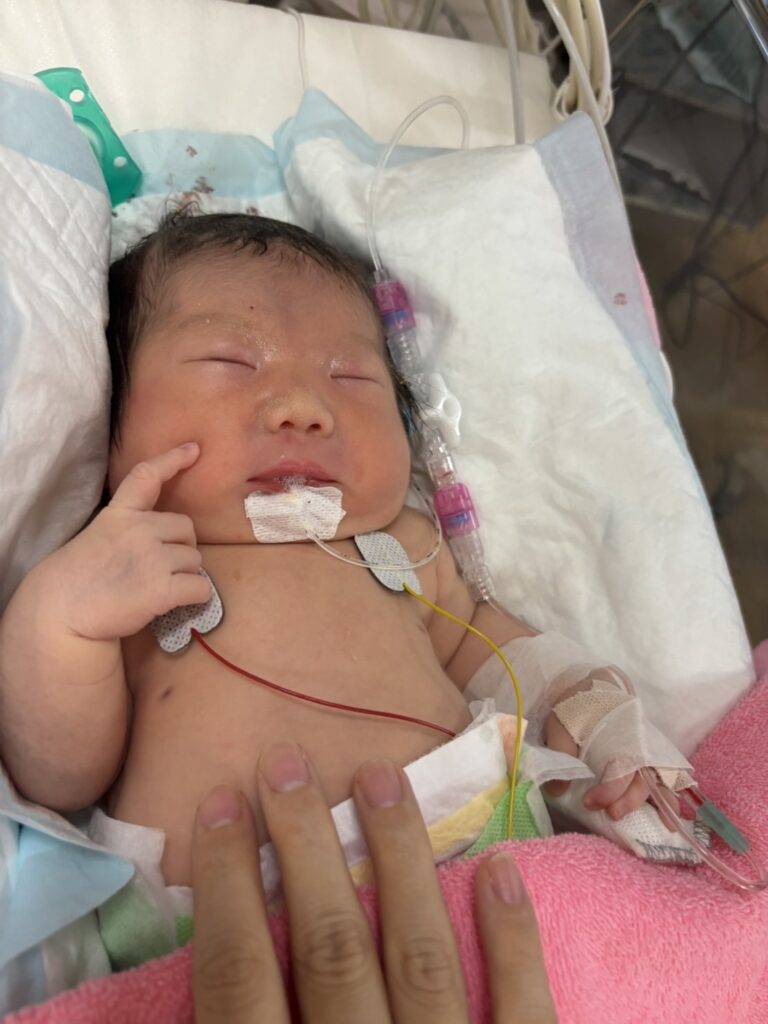
    And more than anything, I knew what it looked like to watch her tiny chest move as she fought to breathe and live, surrounded by machines and wires.

    So even when the doctor’s explanations frightened me, part of me kept coming back to the same thought.

    We have to do this.

    I have to protect her.

    No matter what happens, I have to raise her, and I have to become strong enough to do whatever this child needs.

    At first, I truly thought,

    I have to devote my life to raising this child.

    But as I spent more time beside her in the NICU, looking at her face, something about that thought slowly began to change.

    Of course I had to raise her.

    I was her mother, and protecting her was part of being her mother.

    But maybe that wasn’t the whole story.

    Maybe I wasn’t going to be the only one helping her grow.

    Maybe, as she grew, we would grow with her.

    She had only been alive for a few days, and already she had shown me that so many things I had once considered ordinary were never guaranteed at all.

    Breathing, holding your baby, drinking milk by mouth, seeing the faces of the people who love you, hearing their voices, standing on your own feet, taking your first steps—before she was born, I had never stopped to think about how extraordinary any of those things really were.

    Now I found myself thinking about every one of them.

    Maybe living beside this little girl would allow me to see things I had never been able to see before.

    Maybe she would teach me to notice things I had once passed by without a second thought, and maybe our understanding of life itself would slowly change as she grew.

    That did not mean I had suddenly accepted everything with a smile.

    I was still frightened of the eye examinations and the hearing tests, still worried about her breathing and feeding, still afraid of what might happen with her feet and of the surgeries she might need someday.

    There were endless things I could worry about if I allowed myself to look too far ahead.

    But I was beginning to understand that I did not need to know everything today, and I did not need to accept her entire future all at once.

    What we learned today, we could think about today.

    When the next test gave us another answer, we could think about that then.

    If she learned to do something new, we could celebrate it together.

    If something did not go well, we could sit down with the doctors and nurses and figure out what to do next.

    Just as the doctors gathered the newest information and explained it to us every few days, perhaps we did not need to carry the weight of our daughter’s entire life at once.

    We only needed to face what was in front of us.

    One thing at a time.

    The long name that had frightened me so much during the pregnancy—

    congenital spondyloepiphyseal dysplasia—

    was slowly beginning to mean something different to me.

    It was a condition our daughter would live with, and there was no doubt that it would affect many parts of her life.

    But it was not everything she was.

    She had her father’s eyes and eyebrows.

    She looked even more like him when she slept.

    She was warm when I held her.

    And inside that tiny body, she was working hard to breathe and live another day.

    Beyond the name of the condition,

    there was Ito-chan.

    And so I began to change the words I had been telling myself.

    Instead of,

    “I have to devote my life to raising this child,”

    I began to think,

    “Let’s grow together.”

    I still didn’t know what was waiting for us.

    There would be tests, results, more tests, moments of relief, and probably many moments of fear.

    But somewhere along the way, as we walked beside our daughter, I believed that we would begin to notice things we had never noticed before, learn things we had never known, and slowly grow alongside her.

    Maybe that was enough.

    Ito-chan,

    at that time, we knew almost nothing about the future waiting for you.

    But maybe we were never supposed to know everything from the beginning.

    We could learn one thing at a time.

    One day at a time.

    And while you grew,

    we could grow beside you.

    That day in the NICU, as I looked at the single sheet of paper the doctor had prepared and listened to everything they could tell us about a future still filled with unknowns, I slowly began to believe that maybe this was how we would move forward—

    not by knowing everything,

    but by learning it together.
  • いとちゃんの物語 第二章 第三話

    先生から聞いた病気の話

    🌍Read in English

    妊娠中、私たちは先生から何度も、「詳しいことは、産まれてから分かります」と言われていた。

    エコーで分かることには限界があり、骨が短いことや病気の可能性についてはある程度分かっていても、実際にどの程度の症状があるのか、自分でどのくらい呼吸ができるのか、目は見えているのか、耳は聞こえているのか、そして産まれたあとにどのような治療が必要になるのかまでは、お腹の中にいる娘を見ているだけでは分からなかった。

    だから私は、どこかで「産まれたら分かる」と思っていたのだと思う。

    1月5日になって娘が産まれれば、妊娠中からずっと抱えてきた「分からない」という時間が終わって、良くも悪くも何かしらの答えが出るのだと思っていた。

    けれど、実際に娘が産まれてみると、それは少し違っていた。

    産まれた瞬間にすべての答えが出るわけではなく、むしろ娘が産まれたことで初めてできる検査が始まり、そこで一つ結果が出れば次に確認しなければならないことが見つかって、私たちはそこからまた、一つずつ娘の身体のことを知っていくことになった。

    NICUでは、先生が一枚のA4用紙を用意して、私たちに娘の病気について説明してくれた。

    その紙には、妊娠中から可能性を言われていた「先天性脊椎骨端異形成症」という病名とともに、娘の身体について今分かっていること、これから考えられること、必要になる検査や治療について、私たちにも分かるように整理されていた。

    「間違いなく、この病気です」

    と、その時点ではっきり断定されたわけではなかったけれど、産まれてから行われた検査や身体の特徴を合わせて考えると、ほぼ先天性脊椎骨端異形成症で間違いないだろう、という説明だった。

    妊娠中から何度も聞いていた病名だったから、初めて耳にする言葉ではなかったし、自分なりに調べてもいたし、そうなのだろうという覚悟もしていたはずなのに、目の前の紙にその病名が書かれ、それが今NICUで眠っている自分の娘についての説明なのだと思うと、妊娠中に聞いていたときとは、同じ言葉なのにまったく違う重さを持っているように感じた。

    先生はその紙を見ながら、一つ一つ、ゆっくり説明してくれた。

    この病気では、これから成長していく中で低身長になる可能性が高いことについては、妊娠中から長管骨が短いと言われ続けていたこともあって、私たちの中でもある程度は受け止める準備ができていたのだと思う。

    身体が小さくても元気に生きていけるのであれば、それはこの子の個性として受け入れていけばいい。

    そんなふうに考えることもできていた。

    ただ、産まれてから具体的に聞いた話は、身長のことだけではなかった。

    娘は産まれた直後から、自分の力だけで呼吸することが簡単ではない状態だったため、今後の状態によっては呼吸を助けるための呼吸器が必要になる可能性があることも説明された。

    私はその話を聞きながら、NICUで何度も見ていた娘の小さな胸を思い浮かべていた。

    胸が少し上がって、下がって、また上がる。

    私たちが普段、意識することすらない呼吸というものを、娘は産まれたその日から一生懸命に繰り返していて、その姿を見ていると、「息をする」ということさえ決して当たり前ではないのだということを、初めて自分のこととして考えるようになった。

    目についても、この時点ではまだ、どのくらい見えているのかは分からず、これから検査をしながら確認していく必要があると言われた。

    耳についても同じで、今どの程度聞こえているのかはこれから調べていくことになり、この病気では難聴になる可能性も高いため、成長とともに継続して確認していく必要があるという説明だった。

    娘の顔を見るたびに、大きな目が印象的で、妊娠中にエコー写真を見ながら「目、大きすぎない?」なんて夫と笑っていたことを思い出していたけれど、その目が私たちの顔をどのくらい見ているのかは、まだ分からなかった。

    娘の名前を呼びながら話しかけても、その声がどのくらい届いているのかも、まだ分からない。

    「産まれたら分かる」と思っていたのに、産まれてみれば、今度は「これから検査をして分かっていく」という言葉に変わっていた。

    そのとき私は初めて、出産というのは長く続いた不安の答え合わせをする日ではなく、この子の身体について本当に知っていく時間の始まりだったのだと思った。

    そして、産まれてから初めて実際に分かったことの一つが、口蓋裂だった。

    妊娠中から口蓋裂がある可能性については聞いていたけれど、実際にあるかどうかは産まれてみなければ分からず、娘には口蓋裂があることが出生後に分かった。

    口蓋裂があることで、口の中でうまく圧を作ることが難しく、普通の赤ちゃんと同じようにミルクを口から飲むことが簡単ではないため、これから少しずつ飲む練習をしていくことになり、そのために口蓋裂に対応したマウスピースも作ることになった。

    赤ちゃんが産まれたら、お腹が空いて泣いて、それを抱っこしてミルクをあげて、お腹いっぱいになったら眠る。

    そんな光景を、私は何の疑問もなく想像していた。

    けれど娘にとっては、「口からミルクを飲む」ということさえ、最初から自然にできるものではなく、これから練習をしながら少しずつ覚えていくものだった。

    さらに、娘の両足には強い内反足があり、産まれて初めてその足をしっかり見たときから、私はこの足でいつか立てるようになるのだろうか、この足で歩くことができるのだろうかと心配していた。

    先生からは、今後の成長や足の状態を見ながら治療を続けていくことになり、将来的には手術が必要になる可能性もあると説明された。

    まだ産まれて数日しか経っておらず、まだ家に帰ったこともなく、自分の口でミルクを飲むことさえこれから練習していく小さな娘の未来の中に、すでに「手術」という言葉が出てくることには、やはり怖さがあった。

    けれど、NICUの先生たちは、その一度の説明だけで私たちを置いていくことはなかった。

    娘には毎日のようにさまざまな検査や確認があり、その結果によって状態やこれからの予定も少しずつ変わっていったため、三日に一度くらいの間隔で、その時点までに分かった検査結果や現在の状態、これから行う検査や治療の予定について、先生が内容を更新しながら説明してくれた。

    前回はまだ分からなかったことが、次の説明では少し分かっている。

    その一方で、一つ分かったことで、また新しく確認しなければならないことが出てくる。

    私たちはそのたびに説明を聞き、分からないことを質問し、また娘のところへ戻った。

    一度にすべての未来を告げられるのではなく、そのときの娘に必要なことを、その都度一つずつ教えてもらえたことは、今振り返ると私たちにとってとても大きかったように思う。

    もちろん、説明を聞くたびに不安になることもあった。

    これから呼吸はどうなるのだろう。

    目はどのくらい見えているのだろう。

    耳は聞こえているのだろう。

    ミルクを口から飲めるようになるのだろうか。

    この足で歩けるようになるのだろうか。

    これから何度病院へ通い、どんな治療を受け、何回手術をすることになるのだろう。

    先生の説明を聞けば聞くほど、娘の未来には私たちがまだ知らないことがたくさんあるのだという現実も見えてきた。

    それでも、不思議と妊娠中の私とは少し違っていた。

    妊娠中は、まだ会ったことのない娘の未来を頭の中だけで想像し、病名を検索しては怖くなり、まだ起きてもいないことまで自分の中で現実にしてしまっていた。

    でも今は、その娘が目の前にいる。

    名前がある。

    顔も知っている。

    夫にそっくりな目と眉毛も知っている。

    眠ったときの顔がさらに夫に似ることも知っている。

    初めて抱いたときの軽さも、腕の中で感じた温かさも知っている。

    そして何より、たくさんの機器につながれながらも、小さな胸を動かして一生懸命に生きている姿を知っている。

    だから私は、先生の説明を聞きながら不安になっても、最後には「やるしかない」と思っていた。

    この子を守らなければならないし、何があっても育てていかなければならないのだから、私が強くなって、命をかけてこの子を育てなければならない。

    最初は、本気でそんなふうに思っていた。

    でも、NICUで娘の顔を見ながら過ごしているうちに、その考え方は少しずつ変わっていった。

    「私がこの子を育てなければいけない」

    もちろん、それは間違っていない。

    私はこの子の母親で、この子を守っていかなければならない。

    でも、もしかしたら、それだけではないのかもしれないと思った。

    私が一方的に娘を育てるのではなく、この子と一緒に私たちも成長していくのかもしれない。

    娘が産まれて、まだほんの数日しか経っていないのに、私はすでに、それまで当たり前だと思っていたものが決して当たり前ではなかったことを、いくつも教えられていた。

    息をすることも、赤ちゃんを抱くことも、口からミルクを飲むことも、目で家族の顔を見ることも、耳で声を聞くことも、自分の足で立って歩くことも、以前の私なら一つ一つ立ち止まって考えることすらなかった。

    それなのに今は、その一つ一つがどれほどすごいことなのかを考えるようになっていた。

    もしかしたら、この子と一緒に生きていくことで、今までの自分には見えていなかったものが見えるようになるのかもしれない。

    今まで気づかなかったことに気づき、今までとは違う価値観で物事を見るようになり、この子だけではなく、私たち自身も少しずつ変わっていくのかもしれない。

    もちろん、この時点ですべてを前向きに受け止められていたわけではなかったし、目の検査も怖ければ、耳の検査も怖く、呼吸のことも、ミルクのことも、足のことも、これから必要になるかもしれない手術のことも、考えれば不安はいくらでも出てきた。

    ただ、全部を今日知る必要はないし、全部を今日受け入れる必要もないのだと思えるようにはなっていた。

    今日分かったことは、今日考える。

    次の検査で分かったことは、そのときにまた考える。

    できることが一つ増えたら、一緒に喜んで、うまくいかなかったら、また先生や看護師さんと一緒に考えればいい。

    三日に一度、先生が新しい情報を整理して説明してくれたように、私たちも一度に娘の人生すべてを背負うのではなく、そのとき目の前にあることを一つずつ受け止めていけばいい。

    妊娠中、あれほど怖かった「先天性脊椎骨端異形成症」という長い病名も、少しずつ私の中で意味が変わり始めていた。

    それは確かに娘がこれから付き合っていく病気であり、これからの生活に大きく関わってくるものではある。

    でも、それが娘のすべてではない。

    娘には、夫にそっくりな目と眉毛があって、眠るともっと夫に似て、抱っこをすると温かくて、小さな身体で今日も一生懸命に息をしている。

    病名の向こう側には、

    ちゃんと、いとちゃんがいる。

    だから私は、

    「命をかけて、この子を育てなければ」

    と思っていた気持ちを、少しだけ言い換えることにした。

    一緒に成長していこう。

    これから何が待っているのかは、まだ分からない。

    検査をして、結果を聞いて、また次の検査をして、そのたびに不安になったり、安心したりしながら進んでいくのだと思う。

    それでも、この子と一緒に歩いていく中で、きっと私たち自身も何かに気づいていく。

    今まで見えていなかったものを見つけて、今まで知らなかったことを知って、娘と一緒に少しずつ成長していく。

    それでいいのかもしれない。

    いとちゃん。

    あなたの未来について、

    このときの私たちは、まだほとんど何も知らなかった。

    でも、最初から全部を知る必要なんてなかったんだと思う。

    一日ずつ、一つずつ、あなたと一緒に知っていけばいい。

    あなたが成長していく隣で、

    私たちも一緒に成長していけばいい。

    先生が用意してくれた一枚の紙を見ながら、まだ分からないことばかりの娘の未来について話を聞いたあの日、私は少しずつ、そんなふうに思えるようになっていた。

  • Ito-chan’s Story — Chapter Two, Episode Two

    The First Time I Held You

    🇯🇵Read in Japanese

    The night you were born, your tiny body was surrounded by more wires, tubes, and monitors than I could understand.

    Something to help you breathe.

    Something to watch your heart.

    An IV.

    Heart-monitoring leads.

    And a tube that would help you receive milk.

    At the time, I could not understand exactly what every single thing was for.

    All I could see was my tiny daughter, with lines and tubes extending from almost every part of her body.

    And that still frightened me.

    But as I stood there looking at her face, I slowly began to notice other things too.

    “Her eyes and eyebrows are just like Dad’s.”

    Everything else seemed to look more like me.

    And when she was asleep, she looked especially like my husband.

    During the pregnancy, we had looked at her ultrasound pictures and wondered,

    “Who do you think she’ll look like?”

    Back then, she had existed only in grainy black-and-white images on a screen.

    Now she was right in front of us.

    Her eyes were her dad’s.

    Her eyebrows were her dad’s.

    Her sleeping face was definitely her dad’s.

    And maybe the rest was mine.

    Thinking about those little things somehow helped me see beyond all the medical equipment.

    Little by little, I began to see not just a baby in the NICU—

    but our daughter.

    She was cute.

    I knew that now.

    But “cute” was never the only feeling I had.

    Fear was always right beside it.

    Is she breathing okay?

    Is she in pain?

    Are those numbers normal?

    What was that sound?

    Every time one of the machines made a noise, my attention immediately snapped toward it.

    Even when I was simply standing beside my daughter, part of me was always tense.

    Then came the next day.

    At around three in the afternoon, one of the nurses asked me,

    “Would you like to hold her?”

    It would be the first time.

    The first person to truly hold our daughter.

    The nurse wanted that person to be me.

    Her mother.

    I think there was a kindness in that decision—a quiet wish from the nurse that the first arms to hold this little girl would be her mother’s.

    They placed her in my arms.

    There were still so many things attached to her body.

    I could not simply scoop her up the way I had imagined holding my newborn.

    We had to be careful with the tubes and wires.

    With the nurse’s help, her tiny body was gently placed into my arms.

    She was light.

    And warm.

    I had wanted to hold her from the moment she was born.

    I had touched her the day before.

    I had seen her face.

    But touching your baby and holding your baby are completely different things.

    She was in my arms.

    My daughter was finally in my arms.

    And the moment that became real to me, I cried.

    Finally.

    I could finally hold her.

    After carrying her inside me for all those months, I could finally wrap my own arms around her.

    And she was breathing.

    Working so hard just to breathe.

    I watched her tiny chest rise and fall.

    Something so ordinary.

    Something most of us never even think about.

    And yet my daughter was putting everything she had into doing it.

    I held her and cried.

    I was happy.

    I was overwhelmed.

    I was worried.

    I was scared.

    It was probably all of those things at once.

    When she was born, my emotions had not been able to catch up with what was happening.

    Doctors and nurses had immediately surrounded her.

    I could not hold her.

    And then she was taken to the NICU.

    But now she was here.

    In my arms.

    The daughter I had carried inside me was really here.

    “You’re doing so well.”

    That was what I wanted to tell her as I looked down at her tiny body.

    After me, my husband held her too.

    Watching our daughter in his arms felt strange in the most beautiful way.

    Until the day before, she had been inside my body.

    My husband could only touch her through my belly.

    Now he was holding her himself.

    Then I held her again.

    My husband stood beside us, and someone took a picture of the three of us together.

    I was holding our daughter.

    My husband was beside me.

    And between us was tiny Ito-chan.

    Our first photograph as a family of three.

    It was not taken in our home.

    It was not even taken in an ordinary hospital room.

    It was taken in the NICU.

    There were still wires and medical equipment attached to our daughter’s body.

    It was probably very different from the first family photograph I had once imagined.

    But none of that mattered.

    That photograph was ours.

    It captured the moment when the three of us truly began to feel like a family.

    I was so happy.

    For the first time, I think I really understood—

    there are three of us now.

    I remained in the hospital for about three days after giving birth.

    During that time, whenever I was allowed into the NICU, I stayed with my daughter for as long as I could.

    My own body was still recovering from childbirth.

    I was exhausted.

    But whenever I was alone in my hospital room, I wanted to see her.

    What is she doing right now?

    Is she sleeping?

    Is she breathing okay?

    Is she crying?

    My mind always returned to her.

    So I went back to the NICU.

    Whenever visiting time began, I went to her.

    At night, I stayed as long as I possibly could.

    I would think,

    I should probably go back now.

    But then—

    just a little longer.

    Five more minutes.

    Just a little longer.

    I stayed until almost the very last moment I was allowed to be there.

    I hated leaving her.

    Before she was born, we had been together twenty-four hours a day.

    When I slept.

    When I ate.

    When I took a bath.

    She was always there, inside me.

    And then she was born, and suddenly there were rules about when I could see her.

    That felt lonely.

    My husband came to the hospital every day too, even while he was working.

    He would finish work, come to the hospital, see our daughter, and then go home again.

    During the pregnancy, he had driven me to this hospital again and again.

    Now he was making the journey to see the daughter who had finally been born.

    Whenever I watched her sleeping in the NICU, I thought,

    She really does look like her dad.

    Especially when she slept.

    She looked so much like him.

    Those little discoveries made me happy.

    Her eyes are Dad’s.

    Her eyebrows are Dad’s.

    Her sleeping face is Dad’s.

    Maybe this part is mine.

    In between all the conversations about illness and medical care, we were beginning to have ordinary moments as parents.

    But the fear never completely disappeared.

    In some ways, the more I loved looking at her, the more frightened I became.

    What is going to happen to her?

    Will she grow?

    Will her breathing be okay?

    What will happen with her feet?

    When will she be able to come home?

    She was precious to me.

    And because she was precious, I was afraid of losing her.

    Love and fear seemed to exist side by side.

    There was something else I began to notice during those days in the NICU.

    The nurses.

    I was amazed by them.

    They watched the monitors connected to these tiny babies while caring for each child with extraordinary attention.

    When a baby cried, they spoke gently.

    They noticed the smallest changes.

    When parents looked frightened or confused, they explained things in a way we could understand.

    I felt as though they were not treating our daughter only as a patient.

    They were treating her as a baby.

    As a little person.

    Watching them care for her saved me in ways I did not fully understand at the time.

    And, of course, our daughter was not the only baby in the NICU.

    There were many others.

    Babies who were unbelievably small.

    Babies connected to machines.

    Babies fighting their own battles for reasons I did not know.

    And there were families who came to see them.

    During my pregnancy, I had sat in the waiting room of this same large hospital and watched many different families.

    I remembered seeing people crying and thinking,

    Maybe one day we will be on that side too.

    And now, I was.

    I was inside the NICU.

    But once I was actually there, I realized that “this side” was not what I had imagined.

    These were not simply “poor babies.”

    They were babies living with everything they had.

    And around them were people doing everything they could to protect those tiny lives.

    Until then, somewhere inside me, I had believed there was a normal way for life with a baby to begin.

    A baby is born.

    The mother holds her.

    The baby drinks milk.

    The family goes home together.

    And then life as a family begins.

    I had assumed those things were ordinary.

    Almost automatic.

    But in the NICU, I learned that there are many different ways for a family’s story to begin.

    Things I had always thought were ordinary were not ordinary at all.

    Breathing.

    Crying.

    Holding your baby.

    Taking a photograph together as a family.

    Simply being alive.

    Maybe every one of those things was extraordinary.

    Only a few days had passed since my daughter was born.

    And yet I already felt as though something inside me had begun to change.

    My idea of what was “normal” was slowly breaking apart.

    And strangely, that was not only a sad thing.

    It felt more like I was beginning to see things that had always existed but that I had never noticed before.

    My tiny daughter, working so hard to breathe.

    Me, crying as I held her for the first time.

    My husband standing beside us.

    And our first photograph as a family of three.

    Whenever I look at that photograph, I still think about that day.

    Maybe that was the moment we truly became

    a family with a baby.

    It was not the beginning I had imagined.

    But it was our beginning.

    Ito-chan.

    The day I held your tiny body for the first time, I still knew almost nothing about your condition.

    I did not know what would happen next.

    I was still carrying so much fear.

    But as I held you in my arms and watched you work so hard just to breathe,

    I slowly began to understand one thing.

    This is our daughter.

    And from here,

    we are going to live this life with her.

  • いとちゃんの物語 第二章 第二話

    初めて会った、小さなあなた

    🌍Read in English

    産まれた日の夜。

    NICUにいる娘の身体には、本当にたくさんのものがついていた。

    呼吸を助けるためのもの。

    心臓の動きを見るためのもの。

    点滴。

    心電図。

    そして、ミルクを飲むための管。

    どれが何のためについているのか、そのときの私にはすべてを理解することなんてできなかった。

    ただ、小さな身体から何本もの線や管が伸びている。

    それだけで、やっぱり怖かった。

    でも、その中にいる娘の顔をじっと見ていると、少しずつ別のことも考えられるようになった。

    「目と眉毛は、パパだね」

    それ以外は、私に似ている気がした。

    寝ている顔は、特に夫によく似ていた。

    妊娠中、エコー写真を見ながら、

    「どっちに似てるんだろうね」

    と話していた。

    あの頃は、まだ白黒の画面の中にしかいなかった娘が、今は目の前にいる。

    目は夫。

    眉毛も夫。

    寝顔も夫。

    それ以外は私。

    そんなことを考えていると、身体についているたくさんの機器の向こう側に、少しずつ「娘の顔」が見えてくるような気がした。

    かわいい。

    そう思った。

    でも、かわいいという気持ちだけではなかった。

    その隣には、いつも怖さがあった。

    ちゃんと呼吸できているかな。

    苦しくないかな。

    この数字は大丈夫なのかな。

    この音は何だろう。

    何か機械が鳴るたびに、私は反応してしまった。

    娘を見ているだけなのに、心のどこかではずっと緊張していた。

    そして、産まれた翌日。

    午後3時頃。

    看護師さんから、

    「抱っこしてみましょうか」

    と言ってもらった。

    初めての抱っこだった。

    誰が最初に抱くのか。

    看護師さんは、最初の抱っこはお母さんに、と考えてくれていた。

    そこにはきっと、

    「まずはママに抱いてもらいたい」

    という看護師さんの優しい願いもあったのだと思う。

    私は娘を受け取った。

    身体には、まだたくさんのものがついている。

    だから、普通に赤ちゃんを抱き上げるようにはいかない。

    管や線に気をつけながら、看護師さんに手伝ってもらって、小さな身体を腕の中に乗せてもらった。

    軽かった。

    そして、温かかった。

    産まれてから、ずっと会いたかった。

    前の日にも触れることはできた。

    目の前で顔を見ることもできた。

    でも、

    「触れる」

    のと、

    「抱く」

    のは、まったく違った。

    自分の腕の中に、娘がいる。

    そのことが分かった瞬間、涙が出た。

    やっと抱けた。

    やっと、この子を自分の腕の中に入れてあげられた。

    娘は、頑張って息をしていた。

    小さな胸が動いている。

    呼吸をする。

    それだけのことを、この子は今、一生懸命やっている。

    私は娘を抱きながら、ただ泣いた。

    嬉しかった。

    感動した。

    心配だった。

    怖かった。

    たぶん、その全部だった。

    産まれた瞬間には、気持ちが追いつかなかった。

    目の前でいろいろな処置が始まって、抱くこともできず、そのままNICUへ行ってしまった。

    でも今は違う。

    腕の中にいる。

    私がずっとお腹の中で育ててきた娘が、本当にここにいる。

    「頑張ってるね」

    そんな気持ちで、小さな身体を見ていた。

    そのあと、夫も娘を抱いた。

    夫の腕の中にいる娘を見るのも、不思議な気持ちだった。

    昨日まで、娘は私のお腹の中にいた。

    夫は、お腹の上から触れることしかできなかった。

    それが今は、自分の腕で娘を抱いている。

    そしてもう一度、私が娘を抱いた。

    そのまま夫が隣に来て、3人で写真を撮った。

    私が娘を抱いて。

    その隣に夫がいて。

    真ん中に、小さないとちゃんがいる。

    初めての家族3人の写真だった。

    病室でもない。

    自宅でもない。

    NICU。

    娘の身体には、いくつもの機器がついていた。

    私たちが妊娠中に想像していた家族写真とは、きっと少し違う。

    それでも、その写真は間違いなく、

    私たち3人が家族になった瞬間の一枚だった。

    嬉しかった。

    ただ、嬉しかった。

    このとき初めて、

    「私たち、3人になったんだ」

    という実感が湧いた気がする。

    私の入院は、3日間ほどだった。

    その間、NICUに入れる時間は、できるだけ娘のそばにいた。

    自分の身体も出産直後で、決して楽ではなかった。

    それでも、病室にいると娘に会いたくなった。

    今、何しているかな。

    寝ているかな。

    ちゃんと呼吸できているかな。

    泣いていないかな。

    そんなことばかり考えた。

    だからNICUへ行った。

    行ける時間になれば、娘のところへ行った。

    夜も、できるだけ長くいた。

    「そろそろ戻らないと」

    と思いながらも、あと少し。

    もう少しだけ。

    そう思って、時間ぎりぎりまで娘のそばにいた。

    離れるのが嫌だった。

    娘が産まれるまでは、24時間ずっと一緒だった。

    私が寝ているときも。

    ご飯を食べているときも。

    お風呂に入っているときも。

    娘はずっと、お腹の中にいた。

    それなのに、産まれた途端、会える時間が決められている。

    それが、少し寂しかった。

    夫も、仕事がある中、毎日病院へ来てくれた。

    仕事を終えて病院へ来て、娘に会う。

    そしてまた帰っていく。

    妊娠中、何度もこの病院まで運転してくれた夫が、今度は産まれた娘に会うために毎日通っていた。

    NICUで眠る娘を見ると、

    「パパそっくりだね」

    と思った。

    特に寝顔。

    本当に夫によく似ていた。

    そんな小さな発見が、嬉しかった。

    病気のことを考えている時間の中に、

    目はパパ。

    眉毛もパパ。

    寝顔もパパ。

    ここはママかな。

    そんな、ごく普通の親の時間が少しずつ増えていった。

    でも、怖さがなくなったわけではなかった。

    むしろ、娘をかわいいと思えば思うほど、怖くなることもあった。

    この子はこれからどうなるんだろう。

    ちゃんと大きくなれるのかな。

    呼吸は大丈夫なのかな。

    足はどうなるのかな。

    いつ退院できるんだろう。

    かわいい。

    だからこそ、失いたくない。

    だからこそ、怖い。

    その二つの感情は、いつも一緒にあった。

    そして、NICUで過ごす中で、もう一つ強く感じたことがあった。

    看護師さんたちの存在だった。

    本当にすごかった。

    小さな赤ちゃんの身体につながった機器を確認しながら、一つ一つ丁寧にケアをする。

    泣けば優しく声をかける。

    少しの変化にも気づく。

    私たち親が不安そうにしていれば、分かるように説明してくれる。

    娘を一人の患者としてだけではなく、一人の赤ちゃんとして接してくれているように感じた。

    私は、その姿を見ながら何度も救われた。

    同時に、NICUにいるのは、もちろん娘だけではなかった。

    そこには、たくさんの赤ちゃんがいた。

    本当に小さな赤ちゃん。

    いくつもの機器につながれている赤ちゃん。

    それぞれの理由で、一生懸命に生きている赤ちゃんたち。

    そして、その子たちに会いに来る家族がいた。

    妊娠中、大きな病院の待合室で、いろいろな家族を見た。

    泣いている人を見て、

    「もしかしたら、私たちもいつか、こちら側になるのかもしれない」

    と思ったことがあった。

    そして今、私はNICUの中にいた。

    でも、実際にそこへ来てみると、妊娠中に想像していた「こちら側」とは少し違った。

    そこにいたのは、

    かわいそうな赤ちゃんたち、

    ではなかった。

    それぞれの身体で、一生懸命生きている赤ちゃんたちだった。

    そして、その小さな命を守ろうとしている人たちがいた。

    私はそれまで、

    赤ちゃんは産まれたら、お母さんに抱かれる。

    ミルクを飲む。

    一緒に家へ帰る。

    そして家族の生活が始まる。

    どこかで、それが「普通」だと思っていた。

    でも、そうではない始まり方もたくさんあることを、私は初めて知った。

    当たり前だと思っていたことは、当たり前ではなかった。

    呼吸すること。

    泣くこと。

    抱っこできること。

    家族3人で写真を撮れること。

    ただ、生きていること。

    その一つ一つが、本当はすごいことなのかもしれない。

    娘が産まれて、まだ数日しか経っていない。

    それなのに、自分の中にあった「普通」というものが、少しずつ崩れていくのを感じていた。

    それは、悲しいことだけではなかった。

    むしろ今まで見えていなかったものが、少しずつ見えるようになった感覚に近かった。

    小さな身体で、頑張って息をしている娘。

    その娘を抱きながら泣いた私。

    隣で笑っている夫。

    そして、初めて撮った3人の写真。

    あの写真を見ると、今でも思う。

    あの日、私たちはようやく、

    「赤ちゃんが産まれた家族」になったのかもしれない。

    想像していた始まり方とは違った。

    でも、これが私たちの始まりだった。

    いとちゃん。

    小さなあなたを初めて抱いたあの日。

    私はまだ、あなたの病気についてほとんど何も知らなかった。

    これから何が起こるのかも分からなかった。

    怖さも、まだたくさん残っていた。

    それでも、腕の中で一生懸命息をしているあなたを見ながら、

    私は少しずつ、

    「この子と生きていくんだ」

    ということを感じ始めていた。

  • Ito-chan’s Story — Chapter Two, Episode One

    The Day You Were Born

    🇯🇵Read in Japanese

    She was born.

    After what felt like an endless series of pushes, our daughter finally came out with the help of vacuum-assisted delivery and the doctors.

    The first thing that caught my attention was the shape of her head.

    Because of the vacuum-assisted delivery, her head looked incredibly long and stretched.

    She looked very different from the baby I had imagined all those months while staring at her ultrasound pictures.

    And then—

    she cried.

    I heard her voice.

    How many times had I wished for that during the pregnancy?

    Please breathe.

    If you can, please let me hear your voice.

    The daughter I had spent months making those wishes for was right there in front of me, crying.

    “She cried.”

    That alone gave me some relief.

    But her breathing looked difficult.

    Almost immediately, doctors and nurses gathered around her.

    One thing after another was attached to her tiny body.

    I lay there watching everything happen.

    She had cried.

    She had made it into the world.

    And yet, the moment looked nothing like the image I had carried in my mind of what it would be like when my baby was born.

    I had imagined someone placing her on my chest.

    I would hold her tiny body against mine.

    My husband and I would look at her face together and say,

    “She’s so cute.”

    Somewhere inside me, I think I had assumed that was simply what happened after a baby was born.

    But we did not have that moment.

    We were able to take a photograph.

    But I could not hold her.

    And then our daughter was taken straight to the NICU.

    This was not something that had come as a sudden surprise.

    Before the birth, we had already been told that she would likely need to stay in the hospital for more than a month after she was born.

    I knew that.

    I understood, at least in my head, that she probably would not return to the hospital room with me.

    I knew that the three of us would not simply leave the hospital together and immediately begin our life as a family at home.

    It had all been explained to us beforehand.

    But knowing something is going to happen and actually watching it happen are two very different things.

    She was born.

    She was really here.

    And before I could even hold her, she was taken somewhere else.

    I had waited so long to meet her.

    And yet our first meeting lasted only a moment.

    When my husband first saw her, he later told me that she looked exactly as he had imagined from the ultrasound.

    During the pregnancy, there had been one ultrasound image where the doctor showed us her face from the front.

    Her eyes had looked unbelievably large compared with the rest of her tiny face.

    I had looked at the screen and thought,

    Are her eyes really that big?

    And now, seeing her for the first time, my husband thought they really were.

    Big, round eyes.

    Exactly like the ultrasound.

    He thought she was cute.

    She had cried.

    She had made it here.

    For him, it was an emotional moment.

    For me, it was a little different.

    I hesitated about whether I should write this.

    But it is part of what I truly felt that day, so I want to leave it here.

    When I first saw my daughter after she was born, I did not immediately think,

    She’s so cute.

    Of course I was happy that she had been born.

    I was relieved that she had cried.

    She was the daughter I had wanted to meet for so long.

    But the first emotion that came over me was not something as simple as “she’s cute.”

    Her head was long and stretched from the vacuum delivery.

    Her breathing looked difficult.

    Medical equipment was being attached to her body almost as soon as she entered the world.

    Doctors and nurses were moving quickly around her.

    And before I could hold her, she was taken to the NICU.

    There was simply too much happening.

    I do not think my emotions had caught up with reality yet.

    Throughout the pregnancy, I had heard the same words again and again.

    “We won’t know for sure until she’s born.”

    Would she be able to breathe?

    What would her body actually be like?

    How severe would her condition be?

    What symptoms would she have?

    Whenever I wanted answers, there was always a limit to what anyone could tell me before birth.

    We would know more once she was born.

    So while I desperately wanted to meet my daughter, part of me had also been afraid of the day she would arrive.

    Her birth would be the moment I finally met her.

    But it would also be the moment when all the things we had been unable to know during pregnancy began to become real.

    And now that reality was right in front of me.

    Maybe that was why.

    “Cute.”

    “Happy.”

    “Moved to tears.”

    None of those words alone could describe what I felt.

    After our daughter was taken to the NICU, I remained behind while the medical team continued taking care of me after the delivery.

    Only moments earlier, she had been there.

    She had spent all those months inside my body, appeared in front of me for just a brief moment, and then disappeared into another part of the hospital.

    It was a strange feeling.

    My belly was empty now.

    But my arms were empty too.

    I had given birth, and yet the reality of having a baby still had not fully reached me.

    About four hours later, I was finally able to enter the NICU.

    I was going to see my daughter again.

    This time, I would not just catch a glimpse of her from the delivery bed.

    This time, I could go to where she was.

    I entered the NICU and found her.

    There she was.

    The same baby I had given birth to only hours earlier.

    She was small.

    So incredibly small.

    And there were things attached all over her body.

    Heart-monitoring leads and other equipment surrounded her, some of which I did not even understand at the time.

    Seeing her like that made me worry all over again.

    Then I looked at her feet.

    Both of them turned sharply inward.

    We had already been told during pregnancy that there was something unusual about her feet, but seeing them with my own eyes was different from hearing about them or seeing them on an ultrasound.

    Is she going to be okay?

    Will she be able to walk?

    Can this be treated?

    What is going to happen to her body as she grows?

    Once again, my mind rushed toward the future.

    I had spent so much of the pregnancy doing exactly that.

    And on the very day she was born, I was already doing it again.

    But something was different this time.

    I was finally beside her.

    And I could touch her.

    At last, I could touch the child who had lived inside me for all those months.

    The moment my hand touched her tiny body, reality slowly began to settle in.

    This is my daughter.

    The baby I had watched on ultrasound screens again and again.

    The baby whose movements I had felt inside my belly.

    The baby whose short bones had frightened me so much.

    The baby whose possible diagnosis I had searched for late at night, imagining futures that had not even happened yet and crying over them.

    The baby I had spent months asking,

    Please be born safely.

    And now she was right in front of me.

    There were still wires and medical equipment attached to her tiny body.

    I was worried about her feet.

    I was worried about her breathing.

    She would remain in the hospital for more than a month.

    There was still so much we did not know about her condition or what the future would bring.

    But as I touched her, one thought finally came from somewhere deeper than all the fear.

    Thank you for being born.

    In the delivery room, my emotions had not caught up with me.

    I had not been able to look at her and immediately think she was cute.

    But standing beside her in the NICU, touching her tiny body, none of that seemed important anymore.

    Cute.

    Normal.

    What will happen to her?

    For that moment, I was finally able to stop thinking about the future.

    She was here.

    Right now.

    Alive in front of me.

    And for that moment, that was enough.

    With my hand resting gently against my daughter, I said it once more in my heart.

    Thank you for being born.

    Ito-chan.

    We finally met.

  • いとちゃんの物語 第二章 第一話|産まれた日

    🌍Read in English

    産まれた。

    長い時間、何度いきんでもなかなか出てこなかった娘が、吸引と先生の力を借りて、ようやく私の身体の外へ出てきた。

    その瞬間、まず目に入ったのは、娘の頭だった。

    吸引分娩だったからなのか、頭が驚くほど長く伸びていた。

    妊娠中、何度もエコー写真を見ながら想像していた赤ちゃんの姿とは、ずいぶん違って見えた。

    そして、娘は泣いた。

    その声を聞いた。

    妊娠中、何度願っただろう。

    ちゃんと息をして。

    できることなら、あなたの声を聞かせて。

    そう願い続けてきた娘が、目の前で泣いている。

    「泣いた」

    そのことには、確かに安心した。

    でも、娘の呼吸は苦しそうだった。

    産まれたばかりの娘の周りに、すぐに先生や看護師さんたちが集まった。

    身体には、次々といろいろなものが取り付けられていった。

    私は横になったまま、その様子を見ていた。

    泣いてくれた。

    産まれてきてくれた。

    それなのに、私が思い描いていた「赤ちゃんが産まれた瞬間」とは、まったく違っていた。

    産まれた赤ちゃんを胸の上に乗せてもらう。

    小さな身体を抱きしめる。

    夫と一緒に顔を覗き込んで、

    「かわいいね」

    と言う。

    そんな場面を、どこかで当たり前のように想像していたのだと思う。

    でも、私たちにはその時間がなかった。

    写真を撮ることはできた。

    けれど、抱っこすることはできなかった。

    娘は、そのままNICUへ行くことになった。

    それ自体は、突然知らされたことではなかった。

    妊娠中から、産まれたあとは1ヶ月以上の入院になるだろうと聞いていた。

    だから、頭では分かっていた。

    産まれてすぐ、一緒に病室へ戻れるわけではない。

    すぐに家族3人の生活が始まるわけでもない。

    そうなる可能性が高いことは、何度も説明されていた。

    それでも、実際に娘が連れて行かれるのを見るのは、想像していたのとは違った。

    産まれた。

    確かに産まれた。

    でも、抱くこともできないまま、娘は私たちとは別の場所へ行った。

    あれほど会いたかったのに。

    会えた時間は、ほんの少しだった。

    夫は、産まれた娘を見たとき、

    「エコー写真で見ていた通りだ」

    と思ったらしい。

    妊娠中、先生が正面から顔を映してくれた、あのエコー写真。

    身体の大きさに対して、驚くほど目が大きく見えて、

    「目、大きすぎない?」

    と私が思わず笑ってしまった、あの写真。

    本当に、そのままだった。

    目がクリクリしていた。

    夫は、

    かわいい。

    泣いてくれた。

    産まれてきてくれた。

    そんな気持ちで、感動したという。

    でも、私は少し違った。

    これは書くべきなのか、少し迷う。

    でも、あのとき本当にそう感じたのだから、残しておこうと思う。

    私は、産まれたばかりの娘を見て、すぐに「かわいい」とは思えなかった。

    もちろん、産まれてきてくれたことは嬉しかった。

    泣いてくれたことにも安心した。

    ずっと会いたかった娘だった。

    それでも、目の前にいる娘を見た瞬間、私の中に最初に出てきた感情は、単純な「かわいい」ではなかった。

    吸引分娩で長く伸びた頭。

    苦しそうな呼吸。

    産まれた直後から身体に取り付けられていく、いろいろな医療機器。

    慌ただしく動く先生たち。

    そして、すぐにNICUへ向かう娘。

    情報が多すぎた。

    感情が追いついていなかったのだと思う。

    妊娠中、私はずっと「産まれたら分かる」と言われ続けてきた。

    呼吸はできるのか。

    身体はどんな状態なのか。

    病気はどの程度なのか。

    どんな症状があるのか。

    何度聞いても、

    「詳しいことは、産まれてから」

    だった。

    だから私は、娘に会いたいと思う一方で、産まれることを怖がってもいた。

    産まれた瞬間は、娘に会える瞬間であると同時に、それまで分からなかったことが一気に現実になる瞬間でもあったから。

    そして、その「現実」が目の前に現れた。

    だからなのかもしれない。

    かわいい。

    嬉しい。

    感動した。

    そんな一つの言葉だけでは、あの瞬間の自分の気持ちを表せなかった。

    娘がNICUへ行ったあと、私は出産後の処置を受けながら、その場に残った。

    さっきまで、ここには娘がいた。

    ずっと私のお腹の中にいた娘が、ほんの少しだけここにいて、そしてまた別の場所へ行ってしまった。

    不思議な感覚だった。

    お腹はもう空っぽなのに、腕の中にも娘はいない。

    産んだはずなのに、まだ「赤ちゃんが産まれた」という実感が追いついてこなかった。

    それから、およそ4時間後。

    私はNICUに入ることができた。

    娘に、もう一度会える。

    今度は分娩室で一瞬見るだけではない。

    ちゃんと娘のそばへ行ける。

    NICUに入り、娘を見つけた。

    そこにいたのは、間違いなく、さっき私が産んだ娘だった。

    小さい。

    本当に小さな身体だった。

    そして、身体にはたくさんのものがついていた。

    心電図をはじめ、私にはそのとき何のためのものなのか分からないものまで、いろいろな機器につながれていた。

    その姿を見ると、やっぱり心配になった。

    そして、足を見た。

    両足が、強く内側に向いていた。

    妊娠中から足について指摘されていたけれど、実際に自分の目で見ると、想像していた以上だった。

    大丈夫なのかな。

    歩けるようになるのかな。

    治るのかな。

    この子の身体は、これからどうなっていくんだろう。

    また、未来のことを考えた。

    妊娠中、あれほど何度も繰り返してきたことを、私は娘が産まれたその日から、また始めていた。

    でも、分娩室で初めて見たときとは、少しだけ気持ちが違った。

    NICUで娘のそばに行き、触れることができた。

    やっと触れられた。

    自分のお腹の中に何ヶ月もいた子に、初めて自分の手で触れた。

    その瞬間、ようやく少しずつ実感が湧いてきた。

    この子が、私の娘なんだ。

    エコーの中で何度も見ていた子。

    お腹の中で何度も動いていた子。

    骨が短いと言われて、何度も心配した子。

    病名を検索して、まだ起きてもいない未来まで想像して、何度も泣いた。

    ずっと、

    「無事に産まれてきて」

    と願い続けた子。

    その子が、今、私の目の前にいる。

    身体にはたくさんの機器がついている。

    足の形も気になる。

    呼吸のことも心配だった。

    これから1ヶ月以上、入院生活が続く。

    病気についても、まだ分からないことばかりだった。

    それでも、そのとき初めて、心の底から一つの言葉が出てきた。

    産まれてきてくれて、ありがとう。

    分娩室では、まだ気持ちが追いつかなかった。

    すぐに「かわいい」と思えなかった自分もいた。

    でも、NICUで小さな身体に触れたとき、そんなことはどうでもよくなった。

    かわいいとか。

    普通とか。

    これからどうなるとか。

    そのときだけは、少し先の未来を考えることをやめられた。

    この子は今、ここにいる。

    小さな身体で、生きている。

    それだけでよかった。

    私は娘に触れながら、もう一度、心の中で言った。

    産まれてきてくれて、ありがとう。

    いとちゃん。

    やっと、会えたね。

  • Ito-chan’s Story — Chapter One, Episode Six

    🇯🇵Read in Japanese

    Born.

    January 5.

    This was the day I was going to give birth to our daughter.

    The night before, I had rested my hand on my large belly in the hospital room and whispered to her again and again,

    “We’ll meet soon.”

    Please breathe.

    If you can, let me hear your voice.

    And please, let us see your face.

    Those were the wishes I carried with me as morning came.

    At around seven in the morning, the medication to induce labor was started.

    Because this was my first delivery, I had been told that labor probably would not begin immediately.

    I believed that too.

    I even told my husband,

    “You don’t have to come that early. It probably won’t happen so quickly.”

    I thought it might be a long day.

    There was even a part of me that wondered whether our daughter would actually be born that day.

    So when the induction began, I was still relatively calm.

    This is just the beginning.

    Things will probably move slowly from here.

    At least, that was what I thought.

    But my body responded much faster than anyone had expected.

    About two hours after the induction began, the pain started to grow stronger.

    At first, I wondered,

    Is this labor?

    But I did not have much time to wonder.

    Soon, the pain became impossible to ignore.

    It hurt.

    That was almost the only thought left in my mind.

    The pain came in waves unlike anything I had ever experienced.

    One wave would finally begin to fade, and just when I thought I could breathe again, another would come.

    I immediately contacted my husband.

    “The contractions started. Hurry.”

    Only a short time earlier, I had told him there was no need to come early.

    Now, none of that mattered.

    I just wanted him there.

    Suddenly, facing the pain alone felt frightening.

    After that, I was given anesthesia for the epidural delivery.

    I thought,

    This should make it easier.

    But for me, it did not work as well as I had expected.

    The pain remained.

    Every time another contraction came, my entire body tensed.

    Perhaps I had imagined that the word “epidural” meant the pain would almost disappear.

    But in that moment, it still hurt.

    A lot.

    Then my husband arrived.

    The moment I saw his face, I felt a little safer.

    Throughout the pregnancy, we had traveled to this hospital together again and again.

    We had listened to unfamiliar medical terms together.

    We had heard frightening possibilities.

    I had cried many times.

    And now, on the day our daughter was finally going to be born, he had come to stand beside me again.

    We both thought labor might take a long time from there.

    But around three hours after the induction had begun, the contractions had already become intense, and the atmosphere in the room began to change.

    I was being prepared to give birth.

    Everything was moving much faster than I had expected.

    That morning, I had only just begun the induction.

    I had told my husband not to hurry.

    And now, suddenly, it felt as though we were already approaching the moment when our daughter would be born.

    When the contractions became stronger again, my husband was asked to move temporarily to another room while the medical staff performed the necessary procedures.

    The pain continued while he was gone.

    My sense of time gradually disappeared.

    I did not know how many minutes had passed.

    I stopped caring what time it was.

    I had no idea how much longer it would take.

    There was only the next contraction.

    And then the next.

    When the doctors thought the birth might be getting close, my husband was allowed back into the delivery room.

    Until then, everything had progressed smoothly.

    My body had responded quickly to the induction.

    The contractions had started.

    I was ready to push.

    So I thought,

    Maybe it won’t take much longer.

    But that was when time began to feel unbearably long.

    Push.

    Rest.

    Another contraction.

    Push again.

    Again.

    And again.

    But she did not come.

    Every time, I thought,

    Maybe this time.

    But she still did not come.

    Another contraction would arrive, and I would gather every bit of strength I had and push harder than I thought my body was capable of pushing.

    Still, she did not come.

    My husband stayed near my head the entire time.

    There was not much he could physically do to help me.

    So he kept gently stroking my head.

    Again and again.

    It hurts.

    I can’t do this anymore.

    I’m exhausted.

    Those thoughts came into my mind, but every time another contraction arrived, I had no choice but to try again.

    The medical team explained that for a baby to be born, it was not only the mother’s pushing that mattered—the baby also needed some strength of her own to move through the birth canal.

    They thought our daughter’s strength might be a little weak.

    The moment I heard that, all the fears I had carried throughout the pregnancy briefly returned.

    Is she okay?

    Can she make it out?

    But there was no time to disappear into those thoughts.

    All I could think was,

    Come on.

    Please come out.

    We’re doing this together.

    Just a little more.

    Come to us.

    One hour passed.

    Then two.

    Still, our daughter was not born.

    My own strength was fading, but the doctors were also concerned about how long the baby could continue.

    Eventually, we were told that if she could not be delivered, a cesarean section might become necessary.

    After coming this far, I might still need a C-section.

    But strangely, when I heard that, I did not think,

    I have to give birth naturally.

    I did not care how she came into the world anymore.

    I only wanted her to be safe.

    For months, I had worried about her diagnosis.

    Her breathing.

    Possible complications.

    Her future.

    But now, before any of those things mattered, there was only one thing I wanted.

    Please make it here safely.

    Eventually, the decision was made to use vacuum-assisted delivery.

    By that point, I suddenly realized how many people were in the delivery room.

    Doctors.

    Midwives.

    And others who may have been residents or observers—I did not know.

    In my memory, there were around fifteen adults in the room.

    Even in the middle of labor, part of me wondered,

    Are there usually this many people at a birth?

    Is our daughter’s birth unusual?

    Is everyone here because there is something special about her case?

    It was a strange thought to have at that moment.

    But then another contraction came, and there was no room left in my mind for anything else.

    It was time for the vacuum-assisted delivery.

    I pushed again.

    Then a very tall, large male doctor stepped in.

    At the time, I had no idea who he was.

    Only later did I learn that he was the most senior doctor there.

    He positioned himself above me and pressed down on my abdomen with tremendous force, pushing from the upper part of my belly downward as though he were helping guide our daughter toward the outside world.

    The vacuum.

    My pushing.

    And the doctor’s powerful push.

    Everything happened together.

    And then—

    she was born.

    After all those hours that had felt endless, the actual moment happened in an instant.

    The daughter who had lived inside me for all those months was suddenly outside my body.

    The daughter I had only ever seen through an ultrasound screen.

    The daughter whose bones we had been told were short.

    The daughter who might have congenital spondyloepiphyseal dysplasia.

    The daughter we had been told might have difficulty breathing after birth.

    She was here.

    In the same world as us.

    Born.

    That was the only word that came into my mind.

    I could not immediately think beyond it.

    She had really been born.

    And almost immediately after her birth, our daughter was taken to the NICU.

    We had waited so long to meet her, but our time together did not begin in the way I had imagined.

    I remained in the delivery room.

    Our daughter went to the NICU.

    For months, I had imagined what life would be like after she was born.

    The beginning we were given was a little different from the one I had pictured.

    But one thing was certain.

    She had been born.

    January 5.

    The daughter we had planned to meet on this day had truly made it to us.

    The night before, I had repeated the same wishes over and over.

    Please be born safely.

    Please breathe.

    If you can, let me hear your voice.

    And please, let us see your face.

    I still did not know all the answers.

    I did not know what was waiting for her in the NICU.

    I did not yet know exactly what was happening inside her tiny body.

    I did not know how our lives were about to change.

    There was still so much we did not know.

    But on that day, one thing finally became certain.

    After all the months we had spent fearing the future,

    you were born.

    — End of Chapter One —

    Chapter Two — The First Three Months

    Our daughter went straight to the NICU after she was born.

    We began to learn about her body in ways we never had before.

    There were days spent in the hospital, unfamiliar experiences, and the beginning of a family life that looked different from the one we had imagined.

    And little by little, beyond the diagnosis and beyond the fear, we began to discover who our daughter really was.

    Ito-chan’s story continues—

    into the first three months of her life.

  • いとちゃんの物語 第一章 第六話

    産まれた。

    🌏Read in English

    1月5日。

    この日、私は娘を産むことになっていた。

    前日の夜、病室で大きくなったお腹に手を当てながら、

    「もうすぐ会えるね」

    と何度も話しかけた。

    ちゃんと息をしてほしい。

    できることなら、声を聞かせてほしい。

    そして、私たちに顔を見せてほしい。

    それだけを願いながら、朝を迎えた。

    朝7時頃。

    出産を進めるために、促進剤が始まった。

    初めての出産だから、そんなにすぐには陣痛は来ないだろう、と聞いていた。

    私自身も、すぐに何かが始まるとは思っていなかった。

    夫にも、

    「そんなに早く来なくて大丈夫だよ」

    と伝えた。

    長い一日になるかもしれない。

    もしかしたら、今日中に産まれないことだってあるのかもしれない。

    そんなふうに思っていた。

    だから、促進剤を入れた直後は、まだどこか落ち着いていた。

    これから少しずつ始まっていくんだ。

    そんな感覚だった。

    ところが、予想していたよりもずっと早く身体は反応した。

    促進剤を始めてから、約2時間。

    お腹の痛みが強くなってきた。

    最初は、

    「これが陣痛なのかな」

    くらいだった。

    でも、すぐにそんな余裕はなくなった。

    痛い。

    ただ、それしか考えられなかった。

    今まで感じたことのないような痛みが、波のようにやってくる。

    少し落ち着いたと思ったら、また次が来る。

    私は夫にすぐ連絡した。

    「陣痛きた。早く来て」

    さっきまで、

    「そんなに早く来なくて大丈夫」

    と言っていたのに、もうそんなことを言っている場合ではなかった。

    とにかく早く来てほしかった。

    一人でこの痛みを受けることが、急に怖くなった。

    そのあと、無痛分娩のための麻酔をしてもらった。

    これで少し楽になる。

    そう思っていた。

    でも、私の場合は、思っていたほど効かなかった。

    痛みは残った。

    陣痛の波が来るたびに、身体に力が入った。

    無痛分娩という言葉から、もっと痛みがなくなるものだと勝手に想像していたのかもしれない。

    でも、そのときの私には、十分に痛かった。

    そして夫が病院に到着した。

    顔を見た瞬間、少しだけ安心した。

    妊娠中、何度もこの病院まで一緒に来た。

    何度も知らない病名を聞いた。

    何度も不安になった。

    何度も私は泣いた。

    そして、この日も夫は私のところまで来てくれた。

    もしかしたら、ここから長丁場になるかもしれない。

    私も、夫も、そう思っていた。

    でも、促進剤を始めてから3時間ほど経った頃には、かなり激しい陣痛が来るようになっていた。

    出産のための体勢に入り、いよいよという空気になっていった。

    思っていたよりも、ずっと早い。

    朝、促進剤を入れたばかりなのに。

    さっきまで夫に、

    「そんなに早く来なくていい」

    と言っていたのに。

    気づけば、もう「産む」というところまで来ていた。

    陣痛がまた強くなった頃、処置のため、夫はいったん別室へ移動することになった。

    その間も、痛みは続いた。

    時間の感覚は、だんだん曖昧になっていった。

    何分経ったのか。

    今が何時なのか。

    あとどれくらいなのか。

    そんなことを考える余裕は、ほとんどなかった。

    そして、

    「そろそろかもしれません」

    という頃になり、夫が再び分娩室に戻ってきた。

    ここまでは、順調だった。

    促進剤にもすぐ反応した。

    陣痛も来た。

    出産の体勢にも入った。

    だから私は、ここからそう長くはかからないのかもしれないと思っていた。

    でも、本当に長く感じたのは、そこからだった。

    いきむ。

    休む。

    また陣痛が来る。

    またいきむ。

    何度繰り返しても、産まれてこない。

    「次こそ」

    と思う。

    でも、産まれない。

    また陣痛が来る。

    身体中に力を入れる。

    今まで出したことのないような力を振り絞る。

    それでも、産まれてこない。

    夫は、私の頭の近くにずっといてくれた。

    何ができるわけでもない。

    ただ、私の頭をずっと撫でてくれていた。

    痛い。

    苦しい。

    もう無理かもしれない。

    そんなことを考えながら、それでも陣痛が来れば、また力を入れるしかなかった。

    先生たちからは、赤ちゃんが産まれてくるためには、お母さんが押し出す力だけではなく、赤ちゃん自身が出ようとする力も少し必要なのだと説明された。

    その力が、少し弱いのかもしれない。

    そんな話を聞いた。

    それを聞いたとき、妊娠中に何度も考えていたことが、頭をよぎった。

    この子は大丈夫なのだろうか。

    ちゃんと産まれてこられるのだろうか。

    でも、そのときは考え込む余裕なんてなかった。

    ただ、

    「出てきて」

    と思った。

    一緒に頑張ろう。

    あと少しだから。

    出てきて。

    1時間。

    そして、2時間。

    それでも、娘はなかなか産まれてこなかった。

    私自身の体力も削られていった。

    それ以上に先生たちは、赤ちゃんの体力のことを気にしていた。

    このまま産まれてこなければ、帝王切開になる可能性もある。

    そう伝えられた。

    ここまで来て、帝王切開になるかもしれない。

    でも、その言葉を聞いたとき、不思議と、

    「絶対に自然に産みたい」

    とは思わなかった。

    どんな形でもいい。

    この子が無事なら、それでいい。

    妊娠中、何度も何度も心配してきた。

    病気のこと。

    呼吸のこと。

    合併症のこと。

    でも、今はそれより先に、この子が無事にここまで来てくれることだけが大事だった。

    そして最終的に、吸引分娩をすることになった。

    その頃の分娩室には、いつの間にかたくさんの人がいた。

    助産師さん。

    先生たち。

    そして、研修医なのか、見学の人なのか、私には分からなかった。

    大人が15人くらいいたように記憶している。

    出産中の私は、

    「こんなに人いるんだ」

    と、どこか不思議な気持ちになっていた。

    普通の出産でもこんなに人がいるのだろうか。

    この子が少し特別だからなのだろうか。

    そんなことを考えた。

    でも、すぐにまた陣痛が来て、そんなことを考えている余裕もなくなった。

    いよいよ吸引が始まる。

    私も、もう一度力を入れる。

    そのときだった。

    ひときわ身体の大きな男性の先生が入ってきた。

    そのときの私は、その先生が誰なのか知らなかった。

    あとになって、その場で一番立場の上の先生だったと知った。

    先生は私のお腹の上の方から、赤ちゃんを下へ送り出すように、強い力をかけた。

    私の感覚では、本当に身体ごと押し込まれるような力だった。

    吸引。

    私のいきみ。

    そして、先生の一押し。

    そのすべてが重なった。

    次の瞬間だった。

    産まれた。

    あれほど長く感じていた時間が、その瞬間だけ、一気に動いたような気がした。

    ずっとお腹の中にいた娘が、初めて私の身体の外に出てきた。

    何ヶ月も、エコーの画面越しにしか見ることのできなかった娘。

    骨が短いと言われた娘。

    先天性脊椎骨端異形成症かもしれないと言われた娘。

    産まれたあと、自分で呼吸ができるのか分からないと言われていた娘。

    その娘が今、私たちと同じ世界にいた。

    「産まれた」

    その言葉だけが、頭の中に浮かんだ。

    それ以上のことを考える余裕はなかった。

    ただ、本当に産まれてきてくれた。

    それだけだった。

    そして、産まれた娘は、そのままNICUへ行くことになった。

    ずっと待ち続けて、ようやく会えたはずなのに、私たちの時間はすぐには始まらなかった。

    私はまだ分娩室にいて、娘はNICUへ向かっていく。

    妊娠中、何度も想像した「産まれたあとの生活」は、私が思い描いていた始まり方とは少し違っていた。

    でも、一つだけ確かなことがあった。

    娘は、産まれてきた。

    1月5日。

    この日に会おうと決めた娘が、本当に私たちのところまで来てくれた。

    あの日、病室で何度も願った。

    無事に産まれてきて。

    ちゃんと息をして。

    できることなら、声を聞かせて。

    そして、私たちに顔を見せて。

    まだ、そのすべての答えを私は知らなかった。

    NICUで何が待っているのかも。

    この子の身体に、実際にどんなことが起きているのかも。

    これから私たちの生活がどう変わっていくのかも。

    何も知らなかった。

    それでも、この日、一つだけはっきりしたことがあった。

    何度も未来を怖がった私たちのもとへ、

    あなたは、産まれてきた。

    ―― 第一章 完 ――

    第二章「産まれてから3ヶ月」へ

    産まれてすぐ、NICUへ向かった娘。

    初めて知る娘の身体のこと。

    病院で過ごす日々。

    思い描いていた育児とは少し違う、私たち家族の新しい生活。

    そして、少しずつ見えてきた「病気」ではない、この子自身の姿。

    物語は、産まれてからの最初の3ヶ月へ続きます。

  • Ito-chan’s Story — Chapter One, Episode Five

    The Day We Would Meet You Was Decided

    🇯🇵 Read in Japanese

    My due date was January 9.

    At the beginning of my pregnancy, I had thought of that date simply as the day I might finally meet our baby.

    I imagined the ordinary things people imagine.

    When would labor begin?

    Would I realize immediately that it had started?

    What would my husband be doing at that moment?

    How would it feel to finally hold the baby who had been inside me for so many months?

    But as the pregnancy progressed, January 9 began to mean something different.

    The closer we came to the end of the pregnancy, the more questions we had.

    Would our daughter be able to breathe on her own?

    Would she need medical treatment immediately after birth?

    What symptoms would actually be present?

    What complications, if any, would she have?

    The doctors repeatedly told us,

    “We won’t know the details until she is born.”

    There were things that no ultrasound could tell us.

    Things that no measurement could predict with certainty.

    We would have to wait until she was actually born.

    For months, I had been desperately trying to see the future before it arrived.

    I had searched for diagnoses.

    Read about symptoms.

    Imagined complications.

    Tried to prepare myself for every possible outcome.

    But eventually, I began to realize that there was a limit to how much I could know.

    And little by little, my thoughts became simpler.

    First, I just want her to be born safely.

    I want her to be born.

    I want her to be alive.

    Everything else can come afterward.

    We decided on a planned epidural delivery.

    Rather than waiting for labor to begin naturally, we discussed the schedule with the doctors and decided in advance when I would be admitted to the hospital and when we would prepare for the birth.

    My due date was January 9.

    But the day we decided to welcome our daughter was January 5.

    January 5.

    Until then, the day I would meet her had existed somewhere vaguely in the future.

    Suddenly, it had a date.

    I remember looking at the calendar.

    January 5.

    That was the day I would give birth to her.

    That was the day we would finally see her face.

    That was the day we might finally receive answers to the questions we had carried for months.

    Knowing the date of her birth meant knowing the date we would meet her.

    But it also meant knowing the date when many of the things I had been afraid of would finally become real or disappear.

    As January 5 approached, excitement and fear became almost impossible to separate.

    Sometimes I would look at my husband and say,

    “I’m going to do my best.”

    He would be there for the birth.

    When I thought back over the pregnancy, there had been so many moments when we did not understand each other.

    I had cried.

    I had become angry at how calm he seemed.

    I had wanted him to be afraid in the same way I was afraid.

    But he had driven me to the hospital again and again.

    Ninety minutes each way.

    Sometimes nearly two hours.

    Every two weeks.

    He had sat beside me while doctors explained things we had never imagined hearing.

    And now, when the day came, he would be beside me again.

    The hospital that had once frightened me had also begun to feel different.

    At first, I had associated it with bad possibilities.

    Every time we drove there, I wondered what we would be told next.

    But by the end of the pregnancy, I had begun to see it as the place that could protect our daughter.

    This was the hospital where the doctors already knew about her condition.

    This was where people were prepared in case she needed help breathing after birth.

    This was where she could receive medical care immediately if she needed it.

    And for us, this was the hospital where she needed to be born.

    Then the day of my scheduled admission arrived.

    Because we had chosen a planned epidural delivery, the date had been decided in advance.

    I knew when I would be admitted.

    My bags were packed.

    I had checked everything I needed.

    For days, I had known exactly when I would be leaving home for the hospital.

    Nothing happened suddenly.

    There was no unexpected rush.

    I had been given plenty of time to prepare myself.

    And yet, when the day finally arrived, I felt much lonelier than I had expected.

    Before leaving home, I looked around the room.

    The next time I come back here, she won’t be inside my stomach anymore.

    It was such a simple thought.

    But it made everything feel real.

    For months, wherever I went, our daughter had been with me.

    When I slept, she was there.

    When I ate, she was there.

    When I cried, she was there.

    When my husband and I argued about her future, she was there.

    When I searched for disease names late at night, she was there.

    Soon, for the first time, she would exist outside my body.

    When we arrived at the hospital and it was finally time for me to stay there, the loneliness became even stronger.

    I knew this day was coming.

    I knew being there was the safest thing for our daughter.

    I understood all of it.

    And still, I did not want my husband to leave.

    Until then, every time we had gone to the hospital, we had gone home together.

    No matter what we were told, no matter how frightened I became, eventually we would get back into the car and return home.

    But this time was different.

    This time, I stayed.

    Sitting in the hospital room, I rested my hand over my stomach.

    Our daughter moved.

    Soon, these movements would disappear.

    Not because she was gone.

    But because she would finally be here.

    Outside of me.

    In front of me.

    For months, fear had occupied so much of my mind.

    What disease does she have?

    How severe will it be?

    Will there be complications?

    Will she be able to breathe?

    What kind of life will she have?

    But now, so close to meeting her, those questions began to move slightly further away.

    Another feeling had become stronger.

    I want to meet you.

    I wanted to see the face from all those ultrasound pictures.

    I wanted to know whether her eyes were really as large as they had looked.

    I wanted to hear her voice.

    I wanted to touch her.

    I wanted to know what she smelled like.

    I wanted to finally meet the child I had spent so many months worrying about.

    I placed my hand over my stomach and spoke to her.

    “I’m going to do my best.”

    Then, silently, I added another wish.

    Please be born safely.

    First, just come to us.

    Everything else can wait.

    Whatever happens after that, we will think about it then.

    For so long, the unknown had meant only fear to me.

    But as I waited in that hospital room, I began to understand that the unknown also contained things I had not yet had the chance to love.

    I did not know her voice.

    I did not know her smile.

    I did not know her personality.

    I did not know what would make her laugh.

    I did not know what kind of child she would become.

    There were frightening things we did not know.

    But there were beautiful things we did not know too.

    My due date was January 9.

    But the day we had chosen to welcome our daughter was January 5.

    On that day, I would give birth to her.

    My husband would be there with me.

    And for the first time, we would see our daughter’s face.

    I had spent so much of the pregnancy asking what would happen after she was born.

    But now, there was only one thing I truly wanted.

    Please be born safely.

    Please breathe.

    If you can, let me hear your voice.

    And then—

    let us see your face.

    January 5 was almost here.

    The long months of pregnancy were coming to an end, and a completely new life with our daughter was about to begin.

    I still did not know what kind of day January 5 would become.

    I did not know what we would be told.

    I did not know what I would feel when I finally saw her.

    I only sat there in the hospital room, my hand resting over my stomach, feeling her move inside me and whispering the same words again and again.

    “We’ll meet soon.”

  • Ito-chan’s Story — Chapter One, Episode Four

    We Still Knew Nothing About Your Future

    🇯🇵 Read in Japanese

    The hospital visits every two weeks gradually became part of our lives.

    The long drive with my husband, the familiar hospital entrance, the waiting room, and the ultrasound examination all became routines that I knew well.

    But becoming familiar with them did not make them less frightening.

    Every time we went to the hospital, I carried a small hope with me.

    Maybe this time, her bones will have grown more.

    Maybe she will have caught up a little.

    Maybe the doctor will look at the measurements and say,

    “She’s growing well.”

    I knew I should not expect those words.

    But every time I lay down for another ultrasound, part of me still waited for them.

    Her head continued to grow.

    Her body continued to grow.

    Her heart kept beating.

    Her blood flow looked fine.

    But the long bones remained short, and as the weeks passed, the difference became more noticeable.

    Every time another measurement appeared on the screen, I found myself holding my breath.

    As the doctors examined her more closely, they began to notice other characteristics as well.

    Her long bones were short.

    The pubic bone was difficult to identify clearly.

    There were also characteristic findings involving the cervical spine.

    At first, there had been many possible explanations.

    Gradually, those possibilities began to narrow.

    Then one day, the doctor said something we would never forget.

    “We believe there is a high possibility of congenital spondyloepiphyseal dysplasia.”

    The name was so long that I could not immediately process it.

    Congenital.

    Spondyloepiphyseal.

    Dysplasia.

    I repeated it silently in my head, trying to hold onto the words.

    Congenital spondyloepiphyseal dysplasia.

    Until then, there had been many unfamiliar disease names.

    Possibilities.

    Search results.

    Medical terms I had never heard before.

    Now, one particular name seemed to be moving closer and closer to our daughter.

    The doctors explained that children with this condition could have short stature and that the symptoms varied from person to person.

    They also explained that there could be other complications.

    Problems with vision.

    Difficulty hearing.

    Cleft palate.

    Breathing difficulties.

    I remember thinking that if being short was the main difference, perhaps I could accept that as part of who she was.

    People are born with different bodies.

    Different appearances.

    Different characteristics.

    Maybe being small could simply become one part of our daughter.

    But as the doctor continued talking about the other possible complications, my fear returned.

    What if she cannot see properly?

    What if she cannot hear well?

    What if she cannot breathe on her own?

    She had not even been born yet.

    Nothing had happened.

    And still, once again, my mind began traveling years into a future that did not yet exist.

    Around that time, however, there was one ultrasound picture that always made me smile.

    During one of the examinations, the doctor managed to capture our daughter’s face from the front.

    The moment I saw it, I thought,

    Wait…aren’t her eyes way too big?

    In the black-and-white image, her eyes seemed enormous compared with the rest of her tiny face.

    Of course, I knew it was an ultrasound.

    The angle, the shadows, and the way the image was captured could make things look very different.

    Still, the eyes had such a strong presence that my husband and I looked at the picture again and again.

    At a time when every hospital visit seemed to be filled with measurements, medical explanations, and frightening possibilities, that one picture allowed me to think about something completely different.

    I wonder what she really looks like.

    I wonder whose face she has.

    Are her eyes actually that big?

    For a moment, I could simply look forward to meeting my daughter.

    The disease had not disappeared.

    My fear had not disappeared.

    But while I was looking at that picture, she was not “a baby who might have congenital spondyloepiphyseal dysplasia.”

    She was simply our daughter with the ridiculously large eyes in her ultrasound picture.

    I began to understand that fear and love did not have to replace each other.

    They could exist at the same time.

    I could be terrified of what might happen and still desperately want to meet her.

    I could cry about the future and then laugh at an ultrasound picture.

    I could wish that nothing was wrong while already loving the child who might be born different from what I had imagined.

    Then one day, we sat down with a pediatrician.

    The doctor was incredibly kind.

    He did not simply give us medical information and move on.

    He watched our expressions carefully and spoke slowly, making sure we understood what he was saying.

    I told myself to stay calm.

    Listen carefully.

    Remember everything.

    Do not cry.

    But the truth was, I had been afraid for a very long time.

    Every hospital visit frightened me.

    Every measurement frightened me.

    The moments when the doctors became quiet frightened me.

    At first, I had been terrified because I knew nothing.

    Now, I was terrified because little by little, we were beginning to know more.

    And then, when the pediatrician spoke to us with such kindness, something inside me finally gave way.

    I started crying.

    Once the tears came, I could not stop them.

    Even now, I cannot explain exactly what I was crying about.

    I was sad.

    I was frightened.

    I was exhausted.

    Perhaps somewhere inside me, I was asking,

    Why our child?

    Perhaps I was tired of imagining a future that no one could promise me.

    Perhaps I had simply spent too long trying to hold myself together.

    My husband sat quietly beside me.

    He did not cry.

    He did not say anything dramatic.

    He was simply there.

    And in that moment, having him beside me was enough.

    After we left the hospital, I placed my hand over my stomach again.

    Our daughter had been there before we heard the name of the disease.

    She was still there after we heard it.

    Nothing about her had changed.

    What had changed was what we knew.

    Congenital spondyloepiphyseal dysplasia.

    Sometimes the name felt so enormous that it seemed capable of covering everything else about her.

    But then she would move inside me, and I would remember that there were still countless things about our daughter that no doctor could tell us.

    What would her cry sound like?

    What would make her smile?

    What kind of personality would she have?

    What would she love?

    What would make her angry?

    What would make her laugh?

    How would she surprise us?

    Her future was not made only of medical questions.

    Whenever I looked at that ultrasound picture, I found myself wondering,

    Are your eyes really that big?

    What will your voice sound like?

    What will you smell like when I finally hold you?

    I was not yet strong enough to say,

    “No matter what happens, everything will be fine.”

    I was still scared.

    Of course I wanted the doctors to tell us that nothing was wrong.

    But slowly, one feeling was becoming stronger than all the others.

    I wanted to meet her.

    Not the diagnosis.

    Her.

    The little face we had watched so many times on the ultrasound screen.

    Our daughter, whom the doctor had once simply looked at and called “cute.”

    And whether I was ready or not, the day we would finally meet her was getting closer.