投稿者: itochan_story

  • いとちゃんの物語 第二章 第九話

    小さな足の、大きな手術

    🌏Read in English

    いとちゃんが生まれたときから、ずっと気になっていたものの一つが、左右とも強く内側を向いていた小さな足だった。

    「内反足」

    生まれてすぐに治療が必要だと言われ、診察を受けながらこれからどのように治療していくのかを聞いてきたけれど、まだ先のことのように感じていた「手術」という言葉が、少しずつ私たちの目の前にある現実になっていった。

    そして、生後3ヶ月を過ぎた頃、いとちゃんは初めての手術を受けることになった。

    アキレス腱を切って足の向きを矯正し、その状態をギプスで固定していく手術で、この先いとちゃんが自分の足を使っていくために必要な治療なのだと説明を受けていた。

    何のためにする手術なのかは理解できたし、必要なことなら受けるしかないという気持ちもあったけれど、私が何より怖かったのは、足の手術そのものよりも、

    「全身麻酔です」

    という言葉だった。

    手術の説明と一緒に麻酔についても説明を受け、その中で、全身麻酔である以上、万が一のことが起こる可能性はあるという話もされた。

    もちろん、それは必要な説明だったのだと思うし、どんな手術にも絶対というものはないことくらい頭では分かっていた。

    それでも、

    「万が一」

    という言葉を、自分の娘について聞くのはまったく違った。

    まだ生まれて数ヶ月しか経っていない、抱き上げれば簡単に腕の中に収まってしまうほど小さな娘に全身麻酔をかけ、私たちの見えないところで手術をする。

    必要な治療なのだから大丈夫だと思おうとしても、そのたびに頭の中には「もしも麻酔で何かあったら」「もし手術中に何かあったら」「もし目を覚まさなかったら」という、考えたくもない未来が浮かんできた。

    これまでにも、いとちゃんのことで何度も「大丈夫かな」と思ってきた。

    妊娠中に病気の可能性を聞いたときも、産まれてすぐNICUへ行ったときも、呼吸が苦しそうに見えたときも、聞こえが少し悪いと言われたときも、何度も不安になってきた。

    でも、手術の日に感じた怖さは、それまでとは少し違っていた。

    目の前にいる娘を自分の手から離して、この先は先生たちにすべてを託さなければならず、母親である私にできることが何一つないということが、こんなにも怖いものなのだと初めて知った。

    手術室へ向かういとちゃんを見送りながら、

    「頑張ってね」

    と思った。

    でも、本当は頑張ってほしいわけではなかった。

    頑張らなくてもいいから、ただ無事に戻ってきてほしかった。

    もう一度、いつもの顔を見せてほしかった。

    扉の向こうへいとちゃんが行ってしまうと、私にできることは、本当にただ待つことだけになった。

    何度時計を見ても時間が進んでいるような気がせず、何か別のことを考えようとしても、頭の中には「今、麻酔は大丈夫だろうか」「手術は順調なのだろうか」「ちゃんと戻ってくるよね」という答えの出ないことばかりが浮かんできた。

    自分が代わってあげることもできない。

    様子を見ることもできない。

    声をかけることさえできない。

    ただ待つということが、こんなにも長く、怖い時間になるとは思わなかった。

    そして、しばらくして手術が無事に終わったことを知らされた。

    その言葉を聞いた瞬間、それまで身体の中に入っていた力が一気に抜けて、

    「よかった」

    と思った。

    終わった。

    無事だった。

    ちゃんと戻ってきてくれる。

    手術前からずっと頭の中にあった「もしも」がようやく消えて、やっと息を吐くことができたような気がした。

    ところが、その直後だった。

    「お母さんだけ、こちらへお願いします」

    私だけが呼ばれた。

    その言葉を聞いた瞬間、さっきまで安心していたはずなのに、心臓が止まりそうになった。

    手術は無事に終わったと聞いた。

    それなのに、どうして私だけ呼ばれるのだろう。

    「なんかあったのか……」

    手術中に何かあったのか、麻酔からちゃんと目を覚ましていないのか、呼吸なのか、心臓なのか、それとも何か別の問題が見つかったのか。

    呼ばれた場所へ向かうほんの短い時間の中で、考えたくもないことが次々と頭の中に浮かび、先生の顔を見るまでのわずかな時間が、とても長く感じた。

    そこで先生から聞いたのは、私が想像していたような話ではなかった。

    「麻酔を入れるのに、かなり手こずりました」

    手術そのものは無事に終わっていたけれど、いとちゃんの場合、麻酔を入れるまでにかなり苦労したのだという。

    そして、今後また手術などで全身麻酔が必要になる場合には、今回のことを把握しているこちらの病院で受けた方がいいと思います、という話をされた。

    それを聞いた瞬間、まず私の中に出てきたのは、

    「よかった」

    という気持ちだった。

    もちろん、何もなかったわけではない。

    麻酔を入れることが難しかったという事実は、この先また手術を受ける可能性があるいとちゃんにとって、とても大切なことだった。

    それでもその瞬間の私は、何か取り返しのつかないことが起きたわけではなく、いとちゃんが無事に手術を終えて、ちゃんと私のところへ戻ってきてくれるということに、ただ安心した。

    しかし少し時間が経つと、

    「麻酔を入れるのに、かなり手こずった」

    という先生の言葉が、今度は新しい不安として心の中に残った。

    これから先、いとちゃんにはまた手術が必要になるかもしれないし、口蓋裂の手術も待っている。

    そのたびに、また全身麻酔と向き合うことになるのかもしれない。

    今回の手術が終われば一つ心配が減るような気がしていたけれど、実際には一つの治療が終わるたびに、そこからまた新しく考えなければならないことが出てくるのだと、このときも思った。

    それでも、そのときは先のことよりも、ただ早くいとちゃんに会いたかった。

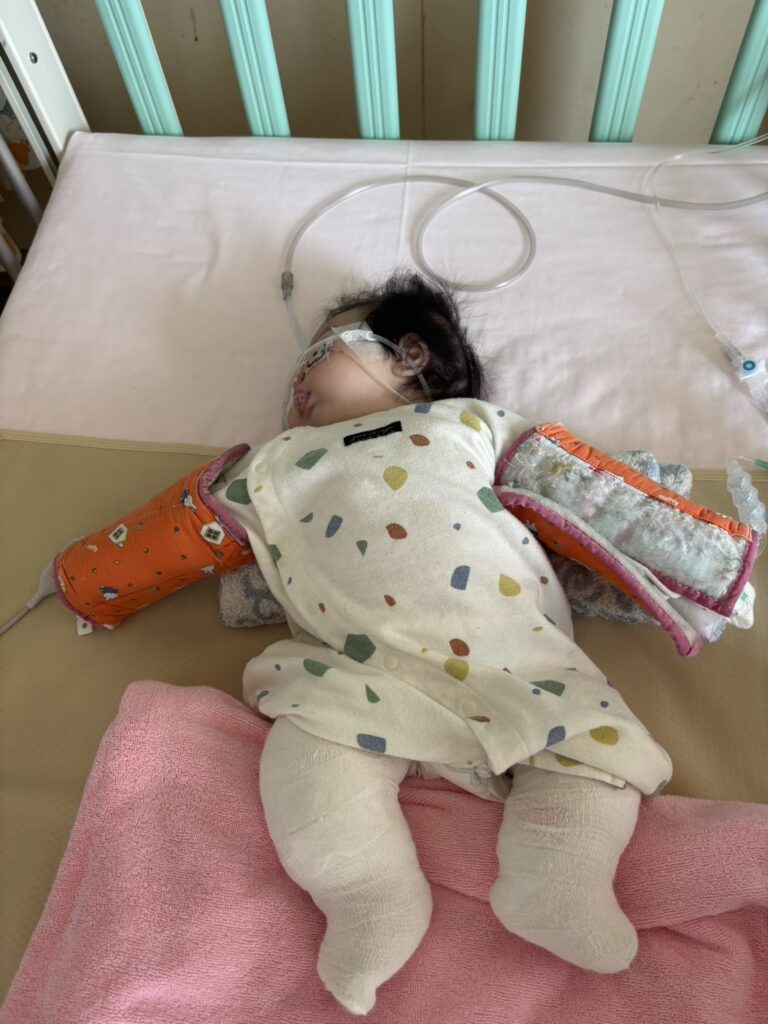
    ようやく手術を終えたいとちゃんのところへ行くと、小さな身体はたくさんの機器につながれ、身体からはいくつもの線が伸び、手術を終えた足には硬いギプスが巻かれていた。

    その姿は、やっぱり痛々しかった。

    まだ生まれて数ヶ月しか経っていないのに、全身麻酔を受け、私たちの見えないところで手術を受け、目を覚ましたら身体にはいくつもの機器がつながり、足にはギプスが巻かれている。

    いとちゃん自身には、何のためにこれをしているのかも分からなかったと思う。

    「頑張ったね」

    そう声をかけながら、私は機器でも、線でも、ギプスでもなく、その向こうにある娘の顔を何度も見た。

    ちゃんといる。

    ここにいる。

    手術前と同じように、私の目の前にいとちゃんがいる。

    それを確認するように顔を見ていると、手術が無事に終わったという言葉を聞いたときよりも、ようやく娘が帰ってきたのだと実感できたような気がした。

    そして、私たちがあれほど心配していたのとは反対に、術後の経過は順調だった。

    大きな問題もなく、次の日には退院できることになった。

    昨日まで全身麻酔の「万が一」を考え、手術中はただ無事に戻ってきてほしいと願い、手術が終わった直後には突然私だけ呼ばれて何かあったのだと思った娘を、次の日にはまた自分の腕に抱いて、一緒に家へ帰ることができる。

    病院を出るときになって、

    「終わったんだ」

    と、ようやく少しだけ実感した。

    もちろん、本当の意味で治療が終わったわけではなかった。

    ここからはギプスをつけた生活が始まり、足の矯正は続いていくし、その先には装具も待っている。

    病院にもまだ何度も通うことになるし、これから先、別の手術が必要になる可能性だってある。

    それでも、この日はそれでよかった。

    全部の未来を一度に乗り越える必要はない。

    今日、一つ乗り越えた。

    今は、それだけで十分だった。

    いとちゃん。

    あなたの小さな足を見ながら、私はこれまで何度も、歩けるのかな、どんなふうに立つのかな、いつか走ることはできるのかなと、ずっと先の未来のことばかり考えてきた。

    でも手術の日、私が願っていたことは、そんな未来のことではなかった。

    ただ、無事に帰ってきてほしい。

    もう一度、あなたの顔を見たい。

    それだけだった。

    そしてあなたは、小さな身体で初めての大きな手術を乗り越えて、ちゃんと私たちのところへ戻ってきてくれた。

    足には大きなギプスがついていて、その先にどんな治療が待っているのかも、どんなふうに成長していくのかも、まだ分からない。

    だから今は、歩けるかどうかも、走れるかどうかも、ずっと先の未来まで考えなくていい。

    まずは今日を一つ乗り越えたことを喜んで、

    また一緒に家へ帰ろう。

    術後のいとちゃん

  • いとちゃんの物語 第二章 第八話

    あなたの周りには、たくさんの人がいる

    🌍Read in English

    家に帰ってからのいとちゃんは、昨日と今日を比べただけでは分からないくらいの小さな変化を毎日のように積み重ねながら、いとちゃんなりのペースで少しずつ大きくなっていった。

    体重も身長も急に増えるわけではなかったけれど、病院で測るたびに少しずつ数字は増えていて、毎日一緒に過ごしている私たちには、数字には表れない変化も少しずつ分かるようになっていた。

    じっとこちらを見ていることの多かった目は、いつの間にか私たちの動きを追うようになり、顔を近づけて左右に動いてみると、その小さな目がゆっくりとついてくるようになった。

    「あ、見てる」

    それだけのことが嬉しくて、私たちは何度も同じことをして、そのたびに本当に目で追ってくれているのかを確かめるように喜んだ。

    表情も少しずつ豊かになり、眠っているか、泣いているか、じっとこちらを見ていることが多かった頃から、口元を緩めたり、こちらの顔を見ながら笑ったような表情をしたりと、昨日までは知らなかったいとちゃんの顔が少しずつ増えていった。

    声も出すようになり、小さな身体から「あー」「うー」と聞こえるたびに、まだ何かを伝えようとしているのかも分からないのに、

    「今、喋ったね」

    と夫と喜んだ。

    もちろん、まだ喋っているわけではないのだけれど、自分の娘が自分の声を使って何かを発しているということが、それだけで嬉しかった。

    手も少しずつ動くようになり、目の前にあるものへ手を伸ばして、小さな指で物をつかむ姿も見られるようになった。

    赤ちゃんの成長として見れば、どれも珍しいことではないのかもしれない。

    それでも妊娠中から、「歩けるのだろうか」「聞こえるのだろうか」「ちゃんと見えるのだろうか」と、まだ起きてもいない未来の「できないかもしれないこと」を何度も考えてきた私にとって、目の前で増えていく「できた」は、どれも当たり前には思えなかった。

    目で追ったこと。

    声を出したこと。

    物をつかんだこと。

    今まで見たことのない表情をしたこと。

    一つひとつは小さな変化だったけれど、それを見つけるたびに、

    「また一つ増えたね」

    と思った。

    身体がこれからどんなふうに成長していくのかはまだ分からなかったけれど、それでも、いとちゃんは誰かと同じ速さではなくても、いとちゃんのペースでちゃんと前へ進んでいるのだと思える瞬間が増えていった。

    ただ、そんな成長を喜べるようになっても、心配なことがなくなったわけではなかった。

    吐き戻しは相変わらずで、ミルクを飲ませれば必ずと言っていいほど吐いていたし、呼吸もまだ荒く見えることがあり、眠っている娘の胸が大きく上下しているだけで気になって、しばらくその動きを見つめてしまうこともあった。

    そして、この頃もう一つ気になっていたのが、「聞こえ」のことだった。

    病院では、いとちゃんは少し聞こえが悪く、特に右耳の聞こえがよくないと言われていて、これからさらに詳しい検査をしていく必要があるという説明を受けていた。

    妊娠中から耳にも症状が出る可能性があるとは聞いていたけれど、それが実際に娘のこととして目の前に現れると、やはり不安になった。

    家でも声をかけたときの反応が少し弱いように感じることがあり、名前を呼んでこちらを向けば「聞こえてる」と安心するのに、反応がなければ「やっぱり聞こえにくいのかな」と心配になり、何度も音を出したり、左右から声をかけたりして確かめたくなった。

    右耳はどのくらい聞こえているのだろう。

    左耳は大丈夫なのだろうか。

    これから言葉を覚えるようになったとき、何か影響があるのだろうか。

    一つ気になることが見つかると、私はすぐにその先の未来まで考えてしまった。

    産まれる前は、ずっと「産まれてみなければ分からない」と言われていたから、どこかで産まれた瞬間にいろいろなことが分かるような気がしていた。

    でも実際には、産まれたあともすべての答えが一度に分かるわけではなく、身体が成長してから分かることもあれば、検査を重ねて初めて分かることもあり、時間が経たなければ分からないこともたくさんあった。

    「まだ分からない」

    その言葉は相変わらず怖かったけれど、いとちゃんと暮らしていく中で、私たちは少しずつ、その言葉と一緒に生活することにも慣れ始めていたのだと思う。

    足の治療も続いていた。

    生まれたときから強く内側を向いていた両足は、これから先も治療を続けていく必要があり、少しずつ次の治療についての話も出るようになっていた。

    鼻には胃管がある。

    足には治療が必要。

    呼吸も気になる。

    聞こえについても、これから詳しく調べていかなければならない。

    私はいつの間にか、いとちゃんを見るときに、娘自身だけではなく、そうした一つひとつの心配事まで一緒に見てしまう癖がついていたのだと思う。

    もちろん、娘は可愛かった。

    それでも心のどこかには、

    「他の人には、どう見えるんだろう」

    という気持ちがずっと残っていた。

    そんな頃、いとちゃんは少しずつ親戚にも会えるようになり、家族以外の人に抱っこしてもらう機会も増えていった。

    最初の私は、胃管を見たらどう思うだろう、足を見たら何か聞かれるだろうか、病気のことをどこまで説明したらいいのだろうと、誰かに会わせる前からいろいろなことを考えていた。

    ところが、実際に会ってみると、私が想像していたような空気にはならなかった。

    「可愛いね」

    そう言いながら、みんな普通にいとちゃんを抱っこして、顔を覗き込み、少し表情が変われば「今、笑ったね」と喜び、「パパに似てるね」「ここはママかな」と、どこにでもありそうな会話をしていた。

    胃管がついていることよりも、いとちゃんの目を見ていた。

    足のことよりも、いとちゃんの表情を見ていた。

    私にとっては毎日気になって仕方がなかった胃管も、これから治療が続いていく足も、病気のことも、周りの人たちにとっては、最初からいとちゃんのすべてではなかったのかもしれない。

    目の前に赤ちゃんがいて、抱っこしたら小さくて、顔を見たら可愛くて、声を出したらみんなで笑う。

    周りの人たちは、ただそのままのいとちゃんを見ていた。

    そんな光景を何度か見ているうちに、

    「もしかしたら、一番気にしているのは私なのかもしれない」

    と思うようになった。

    胃管がついていることも、足の形も、人と少し違うことも、周りからどう見られるのかということも、誰かに何かを言われたから怖くなっていたのではなく、私は誰かに言われるよりもずっと前から、自分で先回りして心配していたのかもしれない。

    そう思えたとき、不思議なくらい少しだけ気持ちが楽になった。

    もちろん、これから先、いとちゃんが成長していけば、もっとたくさんの人に出会うことになるし、そのすべての人が同じように受け止めてくれるとは限らない。

    病気について聞かれることもあるだろうし、見た目について何かを思われることもあるかもしれない。

    それでも、まだ起きてもいない未来の誰かの目を気にして、今、目の前にいる娘との時間まで不安でいっぱいにする必要はないのかもしれないと思えるようになった。

    今のいとちゃんの周りには、夫がいて、家族がいて、親戚がいて、病院には先生や看護師さんたちがいて、抱っこしてくれる人も、笑いかけてくれる人も、小さな変化を一緒に喜んでくれる人もいる。

    私が思っていたよりずっと、いとちゃんの周りにはたくさんの味方がいて、そのことが私にとっても、とても心強かった。

    そして何より、いとちゃん本人は、私がそんなことを考えているのも知らないように、目で人を追い、声を出し、物をつかみ、少しずつ表情を増やしながら、体重も身長もいとちゃんなりのペースで増えていった。

    私はずっと、

    「この子を守らなければ」

    と思っていた。

    もちろん、その気持ちはこれからも変わらないと思う。

    でも、もしかしたら、私たちだけですべてを背負って守ろうとしなくてもいいのかもしれない。

    この子には、もうたくさんの人がいる。

    そしてその人たちは、胃管の向こうにいるいとちゃんを、治療が必要な足の向こうにいるいとちゃんを、ちゃんと一人の女の子として見てくれている。

    それに気づけたことは、私にとって、とても大きかった。

    いとちゃん。

    あなたはまだ、自分の周りにどれだけたくさんの人がいるのか、きっと知らない。

    あなたが少し笑うだけで一緒に笑ってくれる人がいて、声を出すだけで「今、喋ったね」と喜んでくれる人がいて、何かをつかむだけで「できたね」と嬉しくなってくれる人がいる。

    あなたが頑張って成長していることを、自分のことのように喜んでくれる人がいる。

    これから先、あなたの身体にはまだいくつもの治療や検査が待っていて、聞こえについてもまだ分からないことがあり、そして小さな足にも、次の大きな治療が近づいていた。

    私には、まだ怖さがあったし、きっとこれからも何度も怖くなるのだと思う。

    それでも、もう一人ではない。

    私も。

    あなたも。

    いとちゃん。

    あなたの周りには、たくさんの人がいる。

    そしてその真ん中であなたは今日も、たくさんの人に見守られながら、あなたのペースで少しずつ大きくなっている。

  • Ito-chan’s Story — Chapter Two, Episode Seven

    Ito-chan Is Ito-chan

    🌏Read in Japanese

    Once we were home, life became busy in a completely different way from when Ito-chan had been in the hospital, but whenever my husband was home, he helped with her baths and milk, and little by little, the two of us began settling into this new life of raising our daughter together.

    Nighttime, however, was a slightly different story.

    Even when Ito-chan cried in the middle of the night, my husband somehow managed to sleep straight through it.

    Sometimes I genuinely wondered how he could possibly stay asleep with a baby crying right beside him, and looking back now, it makes me laugh, but thankfully, Ito-chan hardly ever cried through the night, which made those early months much easier than they might otherwise have been.

    In many ways, my husband did not change very much after she was born.

    Even during pregnancy, while I worried about things that had not happened yet and imagined every possible version of the future, he had always been the kind of person who dealt with whatever was happening right in front of him.

    There had been times during pregnancy when I looked at him and wondered,

    How can you be so calm?

    Sometimes his calmness made me feel as though I was the only one who was afraid, and there were moments when the difference between us felt lonely.

    But even after our daughter was born and the things we had once only imagined began becoming real, he remained much the same.

    If her breathing worried us, he thought about what needed to be done then.

    If she threw up her milk, he checked how she was doing.

    If we needed to go to the hospital, we went.

    Instead of trying to solve problems that had not happened yet, he seemed to wait until something was actually in front of us and then deal with that one thing.

    That was how he faced life with our daughter.

    I could not do that so easily.

    Even after we brought her home, even after we finally began spending every day together, the question

    What is going to happen to Ito-chan?

    never completely disappeared.

    Whenever her breathing looked difficult, I became frightened, and because she spit up so often, there were many times when I wondered whether she was really okay.

    Coming home from the hospital did not suddenly make me feel safe.

    If anything, having her beside me all the time made me notice everything—every breath, every change in her expression, every time she threw up.

    And throughout those days, there was another thought that returned to me more times than I would like to admit.

    Why me?

    Why us?

    Why her?

    They were questions I had asked myself many times during pregnancy, and even after my daughter was born, I could not simply let them go.

    It was not because I did not love her.

    If anything, perhaps I thought about those things precisely because I loved her so much.

    What treatments would she need?

    How would she grow?

    Would she walk?

    Would her eyes and ears be okay?

    What would happen with her breathing?

    The more I learned about her condition, the more possible futures appeared in my mind, and I frightened myself by trying to live through all of them before they had even happened.

    There was something else I could not bring myself to do.

    I had not told my friends about my daughter’s birth.

    Normally, perhaps you send a photograph and say,

    “She’s here.”

    You tell everyone her name, and messages of congratulations begin to arrive.

    But I could not do it.

    I think I simply did not know how to explain what had happened.

    I was happy that my daughter had been born.

    I was deeply grateful that she had made it into this world.

    But I did not know what words were supposed to come after that.

    How much should I explain about her condition?

    What would people think?

    What would they say?

    And if someone simply said, “Congratulations,” how would I feel?

    While I kept thinking about all of those things, time passed, and I still said nothing.

    Looking back now, I think that silence was simply the best I could do at the time.

    I was not trying to hide my daughter.

    I was still trying to understand everything myself.

    At some point, my husband and I talked about how we wanted to move forward.

    “Let’s grow together, all three of us.”

    Not just our daughter.

    Us too.

    We could learn what we did not yet understand.

    If something became difficult, we could face it when it came.

    Of course, saying those words did not suddenly make me positive about everything, and there were still mornings when I woke up afraid of the future all over again.

    But little by little, something inside me began to change.

    Instead of thinking,

    We have to somehow fix everything for her,

    I began to think,

    Maybe we can just keep moving forward with her.

    My husband’s parents also helped me see things differently.

    From the very beginning, they never looked at Ito-chan with despair.

    They did not treat her as a poor little baby whose life had been ruined by a diagnosis, nor did they look at our family as though something terrible had happened to us.

    They simply kept saying,

    “Ito-chan is Ito-chan.”

    Ito-chan was Ito-chan.

    Nothing more.

    Nothing less.

    She could have a diagnosis.

    She could have a feeding tube.

    Her feet could need treatment.

    There could be surgeries somewhere in her future.

    But before any of those things, she was Ito-chan.

    Every time I heard those words, I realized how much time I had spent looking at my daughter’s future instead of looking at my daughter.

    Because she was right there in front of me.

    She was still too young to clearly show us what she wanted, but little by little, her face became more expressive.

    The baby who had always stared so intently at people began to make little expressions that looked like smiles.

    At the time, I did not even know whether she was really smiling at us.

    But whenever I saw that face, there were moments when I could think,

    Maybe you are already enough exactly as you are.

    Her condition had not disappeared.

    Neither had my fear.

    We had not suddenly been given answers about her future.

    And yet, for that brief moment, I could look at her and think,

    You can just be you.

    Those moments slowly became more frequent.

    A new expression made me happy.

    A face we had never seen before was enough for my husband and me to get excited.

    Day by day, she seemed to show us a little more of herself, and watching those expressions appear became one of the things I loved most.

    Of course, there were still plenty of things that frightened me.

    Her breathing worried me, especially when it looked as though she was struggling, and because she spit up so often, I repeatedly found myself wondering,

    Can a baby really throw up this much and still be okay?

    Happiness and fear did not take turns.

    They existed at the same time.

    I could feel happy because she had smiled, while still watching her breathing closely.

    I could celebrate a new expression and then worry again the moment she threw up her milk.

    There were days when I thought,

    She’s going to be okay,

    and other days when I found myself wondering all over again what her future would look like.

    Maybe accepting that your child has a medical condition does not mean reaching a point where all of the fear suddenly disappears.

    At least, that was not what acceptance looked like for me.

    There were days when I could look forward.

    There were also days when I still thought, Why me?

    There were moments when I looked at my daughter and felt that she was perfect exactly as she was, and there were nights when imagining her future frightened me.

    Both versions of me were real.

    And still, life kept moving.

    Every three hours, it was time for milk.

    We bathed her, cleaned her up when she threw up, watched her sleeping face, went to the hospital, and came home again.

    My husband continued dealing with whatever was directly in front of us, I continued worrying a little too far into the future, and somewhere between the two of us, our daughter kept growing more expressive, as though she had no idea how much her parents were thinking about everything.

    Perhaps all three of us were growing at different speeds.

    Just as Ito-chan was slowly learning and growing in her little body, my husband and I were slowly learning how to be her parents.

    If I could go back now and say just one thing to the person I was during those early months, I think I would tell her,

    You’re going to be okay.

    Not because nothing difficult is going to happen.

    Not because there will come a day when there is nothing left to worry about.

    Not because the hospital visits will disappear or every treatment will suddenly be over.

    I would tell her,

    You’re going to be okay, because she is growing. She is trying, and she is growing.

    Back then, I kept searching for answers somewhere in a future that had not happened yet.

    But perhaps what I really needed to see was not the future version of Ito-chan.

    It was the little girl right in front of me, doing everything she could to live that particular day.

    One new thing.

    One new expression.

    A face that looked slightly different from yesterday, staring back at us again today.

    That was enough.

    I did not need to accept everything all at once.

    My fear did not need to disappear.

    It was okay that there were days when I wondered, Why me?

    Even while carrying those feelings, I was still holding my daughter.

    My husband was still beside us.

    And Ito-chan was still growing.

    Ito-chan is Ito-chan.

    Nothing more.

    Nothing less.

    I think it was through those ordinary days that I slowly began to understand what those words really meant.

    Ito-chan,

    back then, I spent so much time worrying about your future.

    But while I was looking so far ahead,

    you were right there in front of me,

    living today,

    and growing just a little more than you had yesterday.

    So if I could speak to myself back then, I would say it once more.

    You’re going to be okay.

    Because this little girl,

    at her own pace,

    is growing every single day.

  • いとちゃんの物語 第二章 第七話

    いとちゃんは、いとちゃん

    🌏Read in English

    家に帰ってからの生活は、病院にいた頃とはまったく違う忙しさがあったけれど、夫が家にいるときはお風呂に入れてくれたり、ミルクをあげてくれたりして、私たちは少しずつ二人で娘を育てる生活に慣れていった。

    ただ、夜だけは少し違った。

    夜中に娘が泣いても、夫は本当に起きなかった。

    隣で泣いているのに、どうしてそんなにぐっすり眠れるんだろうと思うくらい起きなくて、今振り返れば笑ってしまうけれど、幸い、いとちゃん自身がほとんど夜泣きをしない子だったので、それにはずいぶん助けられた。

    夫は、妊娠中からあまり変わらなかった。

    私がまだ起きてもいない未来のことまで考えて不安になっている横で、夫はいつも、今、目の前で起きていることに対して一つずつ対応していく人だった。

    妊娠中、そんな夫の態度を見て、

    「どうしてそんなに冷静でいられるの」

    と思ったこともあった。

    私だけが怖がっているような気がして、その温度差が寂しく感じられたこともあった。

    でも娘が産まれ、実際にいろいろなことが起きるようになっても、夫はやっぱり変わらなかった。

    呼吸が気になれば、そのときにどうすればいいのかを考える。

    ミルクを吐けば、まず娘の様子を見る。

    病院へ行かなければならなければ、病院へ行く。

    まだ起きていないことを想像して答えを探し続けるのではなく、目の前に一つ問題が現れたら、その一つに向き合う。

    夫はずっと、そんなふうに娘と向き合っていた。

    私は、そう簡単にはできなかった。

    家に帰ることができても、毎日一緒に過ごせるようになっても、

    「いとちゃんは、これからどうなるんだろう」

    という不安がなくなることはなかった。

    呼吸が苦しそうに見えるたびに怖くなったし、あまりにも何度も吐き戻す姿を見ていると、本当に大丈夫なのだろうかと心配になった。

    病院から帰ってきたのだから、もう安心。

    そんなふうに気持ちが切り替わるわけではなかった。

    むしろ娘がいつも目の前にいるようになったからこそ、小さな呼吸も、表情の変化も、吐き戻しの回数も、全部が気になった。

    そして、そんな日々の中で何度も、

    「なんで自分なんだろう」

    と思った。

    どうして私たちだったんだろう。

    どうしてこの子だったんだろう。

    妊娠中から何度も考えてきた問いを、娘が産まれたあとも、私は完全に手放すことができなかった。

    娘のことが大切ではないから、そう思うわけではない。

    むしろ、大切だからこそ、考えてしまった。

    これからどんな治療が待っているのだろう。

    この子はどんなふうに成長していくのだろう。

    歩けるのだろうか。

    目や耳は大丈夫なのだろうか。

    呼吸はこれからどうなるのだろう。

    病気のことを知れば知るほど、まだ起きてもいない未来が頭の中に増えていき、その未来を一つずつ想像しては、自分で怖くなっていた。

    そんな私には、もう一つ、できなかったことがあった。

    友達に、娘が産まれたことを報告することだった。

    普通なら、

    「産まれました」

    と写真を送って、名前を伝えて、たくさんの「おめでとう」を受け取るのかもしれない。

    でも私は、それができなかった。

    何をどう説明したらいいのか分からなかったのだと思う。

    娘が産まれたことは、もちろん嬉しかった。

    産まれてきてくれたことが、本当に嬉しかった。

    それなのに、その後に続く言葉を私は見つけられなかった。

    病気のことをどこまで話せばいいのだろう。

    相手はどう思うだろう。

    どんな言葉が返ってくるのだろう。

    「おめでとう」と言われたら、私はどんな気持ちになるのだろう。

    そんなことを考えているうちに、報告できないまま時間だけが過ぎていった。

    今なら、それも当時の私なりの精一杯だったのだと思う。

    娘のことを隠したかったわけではない。

    ただ、私自身がまだ、起きたことのすべてを受け止めきれていなかった。

    夫とは、

    「三人で成長していこう」

    と話したことがあった。

    娘だけが成長していくのではなく、私たちも一緒に成長していこう。

    今分からないことは、これから知っていけばいい。

    できないことがあれば、そのとき考えればいい。

    そう話していても、翌日になればまた不安になることはあったし、その言葉一つですべてを前向きに考えられるようになったわけではなかった。

    でも、少なくとも、

    「この子をどうにかしなければ」

    ではなく、

    「この子と一緒に進んでいこう」

    と思える瞬間は、少しずつ増えていった。

    そして、そんな私たちを最初から変わらず見てくれていたのが、夫の両親だった。

    二人は、娘の病気を知っても、最初から悲観することがなかった。

    特別にかわいそうな子を見るような目でもなく、何か大変なものを抱えた家族を見るような目でもなかった。

    何度も言ってくれた。

    「いとちゃんは、いとちゃんだから」

    いとちゃんは、いとちゃん。

    それ以上でも、以下でもない。

    病名がついていても。

    胃管が入っていても。

    足に治療が必要でも。

    これから手術が待っていたとしても。

    その前に、この子はいとちゃんなんだ。

    その言葉を聞くたびに、私は自分がどれだけ娘の未来ばかりを見ていたのかに気づかされた。

    目の前には、ちゃんと娘がいるのに。

    娘はまだ小さく、自分の意思を言葉や仕草ではっきり伝えられる時期ではなかったけれど、少しずつ表情が豊かになっていった。

    じーっと人の顔を見ていた娘が、ときどき笑ったような顔をするようになった。

    それが本当に私たちを見て笑っていたのか、その頃の私には分からなかった。

    でも、その顔を見ると、

    「このままでいいのかもしれない」

    と思えた。

    病気がなくなったわけではない。

    不安が消えたわけでもない。

    未来の答えが見つかったわけでもない。

    それでも、その一瞬だけは、

    「この子は、この子のままでいい」

    と思うことができた。

    そして、その「一瞬」が少しずつ増えていった。

    娘が笑ったような顔をすれば嬉しかった。

    昨日とは少し違う表情を見せれば、それだけで夫婦で喜んだ。

    少しずつ表情が増え、少しずつ私たちに見せてくれる顔が増えていく。

    その変化を見ている時間が、私はとても好きだった。

    もちろん、心配なこともたくさんあった。

    特に、呼吸が苦しそうに見えるときは怖かったし、あまりにも吐き戻しが多いと、

    「こんなに吐いて大丈夫なのかな」

    と何度も不安になった。

    嬉しいことと、不安なことは、交互にやってくるわけではなかった。

    同時にそこにあった。

    娘の笑顔を見て嬉しいと思いながら、その呼吸が少し気になる。

    昨日より表情が増えたことを喜びながら、またミルクを吐けば心配になる。

    「この子は大丈夫」と思える日があったかと思えば、次の日には「この先どうなるんだろう」と考えてしまう。

    子どもの病気を受け入れるということは、ある日突然すべての不安が消えて、

    「もう大丈夫」

    と思えることではないのかもしれない。

    少なくとも、私にとってはそうではなかった。

    前を向ける日もあれば、なんで自分なんだろうと思う日もある。

    娘を見て、このままでいいと思える瞬間もあれば、将来を想像して怖くなる夜もある。

    そのどちらも、当時の私だった。

    それでも毎日は進んでいった。

    三時間おきにミルクの時間が来て、お風呂に入れて、吐いたら拭いて、眠っている顔を眺めて、病院へ行き、また家へ帰ってくる。

    夫は相変わらず目の前のことに一つずつ向き合い、私は相変わらず少し先の未来まで考えて不安になり、その間で娘は、そんな私たちのことなど知らないように少しずつ表情を増やしていった。

    私たち三人は、それぞれ違う速度で成長していたのだと思う。

    いとちゃんが身体を使って少しずつ成長していくように、私たちもまた、親として少しずつ成長していた。

    今、あの頃の自分に何か一つだけ言葉をかけられるとしたら、私はきっと、

    「大丈夫だよ」

    と言うと思う。

    何も起きないから大丈夫、という意味ではない。

    これから先、心配することがなくなるからでもない。

    病院に行かなくてよくなるわけでも、治療が全部終わるわけでもない。

    それでも、

    「ちゃんと頑張って成長してるから、大丈夫だよ」

    と伝えたい。

    あの頃の私は、まだ起きていない未来の中に答えを探していた。

    でも、本当に見なければならなかったのは、未来のいとちゃんではなく、その日、その瞬間を一生懸命生きている目の前のいとちゃんだったのかもしれない。

    できることが一つ増える。

    表情が一つ増える。

    昨日とは少し違う顔で、今日も私たちをじっと見ている。

    それでよかった。

    全部を受け入れられなくてもよかった。

    不安がなくならなくてもよかった。

    「なんで自分なんだろう」と思う日があってもよかった。

    その気持ちを抱えたままでも、私はちゃんと娘を抱いていた。

    夫も、隣にいた。

    そして娘は、ちゃんと成長していた。

    いとちゃんは、いとちゃん。

    それ以上でも、以下でもない。

    あの頃、何度も聞いたその言葉の意味を、私は毎日の中で少しずつ知っていったのだと思う。

    いとちゃん。

    あの頃の私は、あなたの未来を心配してばかりいたけれど、

    あなたはそんな私の目の前で、

    ちゃんと今日を生きて、

    ちゃんと昨日より少しだけ成長していた。

    だから、あの頃の私にもう一度伝えたい。

    大丈夫だよ。

    この子は、この子の速度で、

    ちゃんと頑張って成長してるから。

  • Ito-chan’s Story — Chapter Two, Episode Six

    Every Day With You

    🇯🇵Read in Japanese

    The moment I stepped through the hospital doors with my daughter in my arms and felt the outside air around us, it finally began to feel real that our life as a family of three was about to begin.

    Of course, I was still afraid.

    At the hospital, there had always been doctors and nurses nearby, and whenever there was something we did not understand, there was someone we could ask, but from now on, we would be the ones closest to our daughter—the ones giving her milk, changing her feeding tube, and noticing the smallest changes in her condition.

    And yet, there was something that made me far happier than all of that made me afraid.

    Tonight, we get to sleep together.

    Until then, no matter how many hours we spent beside her at the hospital, there always came a time when we had to leave our daughter behind and go home without her.

    At night, she stayed at the hospital while I slept somewhere without her, and when morning came, I would make the journey back to see her again.

    But now, it was different.

    Tonight, she would still be there.

    And when I opened my eyes in the morning, she would still be there.

    Something that might sound completely ordinary to someone else felt almost unbelievable to me.

    On our first night together at home, I was happy, but nervous too.

    The nurses had told us,

    “She sleeps well at night.”

    Still, I wondered whether she would really sleep at home, in a completely different environment, and part of me imagined that perhaps she would cry all night and none of us would sleep at all.

    But while I worried, Ito-chan simply slept.

    Quietly.

    Peacefully.

    There was nothing extraordinary happening, and yet I felt as though I could have watched her forever.

    At the hospital, there had always been machines beeping and people moving nearby, but listening to my daughter breathe quietly in our home felt completely different, and as I watched her little sleeping face, I kept thinking,

    She’s really here.

    Thankfully, Ito-chan was hardly ever a baby who cried through the night.

    So it was not her crying that woke us.

    It was the alarm on our phone.

    At first, she needed milk every three hours, and because she rarely cried to tell us she was hungry, we set alarms through the night and woke whenever they sounded, rubbing the sleep from our eyes as we prepared her milk and slowly gave it through her feeding tube.

    Whether it was the middle of the night or early in the morning, three hours would pass and it would be time to feed her again.

    Ito-chan would sometimes be sleeping peacefully beside us while we were the ones waking to an alarm and saying,

    “It’s time for your milk.”

    Looking back, it seems like a slightly strange scene, but that was simply what our new everyday life looked like.

    The feeding tube that had frightened me so much in the hospital gradually stopped feeling like something that belonged only to a medical setting and became part of our life at home.

    When we bathed her, we supported her little body while being careful not to pull or dislodge the tube, and something that had once made me so nervous slowly became part of the ordinary rhythm of caring for our daughter.

    When I first learned to bathe her at the hospital, bath time had been one of those special moments when I could finally feel, I really am this little girl’s mom.

    Now that she was home, it became part of our everyday life.

    One thing I had not expected to be quite so difficult, however, was how often Ito-chan spit up.

    She threw up a lot.

    There were so many times when we would finish giving her milk, think everything was fine, and then suddenly have to wipe her down, change her clothes, clean everything up, and watch her carefully all over again.

    She spit up so often that once we started going out together, there was one thing we almost never left home without.

    A box of tissues.

    Not a little packet.

    An entire box.

    It makes me laugh now, but at the time we genuinely left the house thinking,

    She’s probably going to throw up today too.

    There were days when thinking about her condition, her feeding tube, and the treatments still waiting somewhere in her future made everything feel heavy, but mixed into those difficult days were more and more moments that would eventually become stories we could laugh about.

    Coming home changed more than just the life of the three of us.

    My family and relatives were finally able to hold her too.

    While she had been in the hospital, the number of people who could really spend time with her had been limited, but once she came home, I began seeing my daughter in so many different arms, with people looking down at her little face, talking to her, smiling at her, and telling her how cute she was.

    Whenever I watched someone else holding her, I found myself thinking,

    Look how many people you have around you.

    After we finished staying with my family, we also spent about three months living with my husband’s parents.

    That meant my husband and I did not have to carry everything alone, because there were always people around our daughter—people watching over her, holding her, talking to her, and watching over us as we learned how to be parents.

    During pregnancy, every new piece of information about her condition had made me wonder,

    Are we really going to be able to raise this child?

    But once our life together actually began, I realized that the two of us were never raising her completely on our own.

    Surrounded by so many hands, so many watchful eyes, and so many voices saying, “She’s so cute,” our daughter slowly began to grow.

    From the time she was born, Ito-chan had always been a baby who stared deeply at people.

    If we looked at her, she would look straight back at us, almost as though she were studying our faces and trying to understand who we were.

    She could not speak, of course, and we had no way of knowing what she was thinking, but whenever those eyes stayed fixed on us, I would think,

    She really is watching us.

    And little by little, she began to smile more.

    At first, they were small smiles, but before long she started laughing out loud, and eventually she would laugh and laugh until the whole room seemed to change with her.

    During pregnancy, I had stared at those ultrasound images of her enormous-looking eyes and wondered what she would look like when she was born.

    Now that same little girl was right in front of me, staring into our faces with those eyes and laughing out loud.

    When the doctors first explained her condition to us, nearly every thought I had about the future began with fear.

    Would she be able to breathe?

    Could she see?

    Could she hear?

    Would she ever be able to drink milk?

    Would she be able to walk?

    Would she need surgery?

    The future seemed filled with questions about things she might not be able to do.

    But once we were home and living with her every day, I began to notice something that existed completely outside those fears.

    Our daughter was simply living her life.

    She slept and woke up, watched people, was held in someone’s arms, and slowly began to smile and laugh.

    If I wanted to count all the things she could not yet do, there were probably plenty.

    But there were just as many things she was already doing, right there in front of us.

    Of course, coming home did not mean our life with hospitals was over.

    Treatment for her clubfeet began, and while she was wearing casts, we traveled about ninety minutes each way to the hospital once a week.

    Whenever I looked at those casts wrapped around her tiny legs, I was reminded that our daughter really did need treatment, and thinking too far into the future could still frighten me.

    Once her feet became more stable, those appointments became every three or four months, while her eyes and ears were checked about every three months, and her cleft palate continued to be monitored at similar intervals as we looked ahead toward surgery after her first birthday.

    Little by little, our calendar filled with hospital appointments.

    But hospitals were not our entire life.

    Between those appointments were ordinary days at home.

    We gave her milk, bathed her, slept beside her, held her, laughed with her, cleaned her up when she threw up all over herself, reached for that box of tissues yet again, changed her clothes, and carried on with the day.

    And somewhere inside all of those ordinary moments, the feeling that

    we are raising a daughter with a medical condition

    slowly became less powerful than something much simpler.

    We are living with Ito-chan.

    Perhaps the moments when I felt most strongly that we had truly become a family were the times when the three of us could go somewhere together.

    While Ito-chan was in the hospital, my husband and I had always been the ones going somewhere to see her.

    She was waiting at the destination.

    But now, things were different.

    We could wonder where we should go that day, pack everything she needed, check her feeding tube and milk, remember our inevitable box of tissues, and then leave together.

    We were no longer going somewhere to see our daughter.

    We were going somewhere with our daughter.

    That difference meant more to me than I could explain.

    Being together every day.

    Opening my eyes in the morning and finding her there.

    Sleeping under the same roof at night.

    Taking her with us whenever we went somewhere.

    To someone else, these things might sound so ordinary that they hardly seem worth putting into words.

    But it had taken us one month and twenty days before that kind of “ordinary” life could even begin.

    And because of that, simply being together felt like proof that we had finally become a family.

    From the time I was pregnant, I had imagined my daughter’s future over and over again, and even after she was born, every new test result made me wonder what might be waiting for us next.

    But after coming home and living beside her every day, I slowly began to understand something.

    Maybe becoming a family does not mean knowing everything about the future.

    We do not stay together because we already know what our child will or will not be able to do.

    There can still be questions.

    There can still be fear.

    And even with all of that, we wake every three hours to give her milk, wipe her clean when she throws up, bathe her, sleep beside her, travel to the hospital, and laugh when she laughs.

    Maybe becoming a family is simply sharing enough of those ordinary days, over and over again, until one day you realize that they have become your life.

    Ito-chan.

    You were living each day in that tiny body of yours.

    And beside you, we were learning how to live each of those new days too.

    Instead of looking only at what you could not do, we began to notice what you could do today.

    Instead of staring endlessly into a future we could not yet know, we began to look at the little girl who was right in front of us.

    And somewhere along the way,

    the life that had begun for you inside a hospital

    slowly became

    the everyday life of our family.

  • いとちゃんの物語 第二章 第六話

    あなたがいる毎日

    🌏Read in English

    病院の扉を出て、初めて娘を抱いたまま外の空気に触れたとき、私はようやく、これから私たち三人の生活が本当に始まるのだという実感を持つことができた。

    もちろん、不安がなかったわけではない。

    病院にいれば、何かあったときには先生がいて、看護師さんがいて、分からないことがあればすぐに聞くことができたけれど、これからは娘のすぐそばにいるのは私たちで、ミルクをあげるのも、胃管を変えるのも、娘の小さな変化に気づくのも、すべて自分たちでやっていかなければならない。

    それでも、その不安よりずっと大きかったのは、

    「今日から一緒に眠れるんだ」

    という嬉しさだった。

    これまでは、どれだけ長く病院にいても、帰る時間になれば娘を残して私たちだけが帰らなければならなかった。

    夜になれば娘は病院にいて、私は娘のいない場所で眠り、朝になればまた会いに行く。

    でも、もう違う。

    今日からは、夜になっても娘がいる。

    朝になって目を覚ましても、娘がいる。

    当たり前のように聞こえるそんなことが、私にはたまらなく嬉しかった。

    初めて三人で過ごす夜は、嬉しい反面、少し緊張していた。

    看護師さんからは、

    「夜はよく寝ていますよ」

    と聞いていたけれど、本当に家でも寝てくれるのだろうかと心配していて、病院とは環境も違うし、もしかしたらずっと泣いて眠れない夜になるのではないかとも思っていた。

    けれど、そんな私の心配をよそに、娘は本当にスヤスヤと眠っていた。

    小さな身体で、静かに眠っている。

    ただそれだけの姿なのに、ずっと見ていられるような気がした。

    病院では機械の音や人の気配がいつも近くにあったけれど、家の中で聞こえる娘の寝息は、それまでとはまったく違っていて、その小さな寝顔を見ながら、

    「ああ、本当に家にいるんだ」

    と何度も思った。

    ありがたいことに、いとちゃんはほとんど夜泣きをしない子だった。

    だから夜中に私たちを起こしたのは、娘の泣き声ではなく、携帯のアラームだった。

    最初の頃、ミルクは三時間おき。

    娘自身がお腹を空かせて泣くことがほとんどなかったから、夜中もアラームを設定して、音が鳴れば眠い目をこすりながら起き、ミルクを準備して、胃管からゆっくりと入れていった。

    深夜でも、早朝でも、三時間経てば次のミルクの時間がやってくる。

    娘はその横でスヤスヤ眠っているのに、私たちはアラームで起きて、

    「ミルクの時間だ」

    と準備を始める。

    今振り返ると少し不思議な光景だけれど、それが私たち三人にとっての新しい日常だった。

    病院であれほど怖かった胃管も、家に帰れば特別な医療行為というより、少しずつ生活の中にあるものへと変わっていった。

    お風呂に入れるときも、胃管が抜けたり引っかかったりしないように気をつけながら、小さな身体を支えて洗っていく。

    病院で初めて沐浴をした頃には、「私はこの子のママなんだ」と感じるための特別な時間だったけれど、家に帰ってからは、それが毎日の生活の一部になっていった。

    そして、家に帰ってから想像以上に大変だったのが、吐き戻しだった。

    いとちゃんは、本当によく吐いた。

    ミルクを入れて安心したと思ったら吐いてしまうこともあり、着替えたり、拭いたり、また様子を見たりすることが何度もあった。

    あまりにもよく吐くものだから、外へ出るようになってからは、私たちの荷物の中に必ず箱ティッシュが入るようになった。

    ポケットティッシュではない。

    箱ティッシュ。

    今思えば少し笑ってしまうけれど、当時はそれくらい、

    「どうせ今日も吐くから」

    という前提で出かけていた。

    病気のことや胃管のこと、これからの治療のことを考えると、どうしても重たい気持ちになる日はあったけれど、そんな毎日の中には、こうして今なら笑って話せるような出来事も少しずつ増えていった。

    そして、家へ帰ったことで変わったのは、私たち三人の生活だけではなかった。

    私の家族や親戚も、たくさん娘を抱っこしてくれた。

    病院にいる間は、どうしても娘と関わることのできる人は限られていたけれど、家に帰ってからは、いろいろな人の腕の中に娘がいて、みんながその小さな顔を覗き込み、声をかけ、笑ってくれた。

    娘が誰かに抱っこされている姿を見ていると、

    「この子には、こんなにたくさんの人がいるんだ」

    と思った。

    そして里帰りを終えたあとには、夫の実家で、夫の両親と一緒に約三か月生活することになった。

    私たち夫婦だけですべてを抱えるのではなく、娘の周りにはいつも誰かがいて、いろいろな人が娘を見て、抱いて、声をかけながら、私たちの子育ても一緒に見守ってくれた。

    妊娠中は、病気のことを知るたびに、

    「私たちは、この子をちゃんと育てられるのだろうか」

    と考えていた。

    でも実際に子育てが始まってみると、私たち二人だけで育てているわけではなかった。

    たくさんの人の手と、たくさんの目と、たくさんの「可愛いね」に囲まれながら、娘は少しずつ大きくなっていった。

    いとちゃんは、産まれた頃から、人の顔をじーっと見る子だった。

    こちらが見つめると、まるで何かを確かめるように、じっとこちらを見返してくる。

    まだ言葉を話すわけでもないし、何を考えているのか分かるわけでもないけれど、その目で見つめられていると、

    「ちゃんと見てるんだな」

    と思った。

    そして少しずつ、笑うことも増えていった。

    最初は小さな笑顔だったものが、いつの間にか声を出して笑うようになり、そのうちゲラゲラと笑うようになった。

    妊娠中、エコー写真に映った大きな目を見ながら、

    「どんな顔で産まれてくるんだろう」

    と想像していた娘が、今は目の前で私たちの顔をじっと見て、声を出して笑っている。

    病気について説明を受けたとき、私はこれから起こるかもしれないことばかりを考えていた。

    呼吸は大丈夫なのか。

    目は見えるのか。

    耳は聞こえるのか。

    ミルクは飲めるのか。

    歩けるようになるのか。

    手術は必要なのか。

    未来に並んでいたのは、ほとんどが「できないかもしれない」という不安だった。

    でも、家で娘と毎日過ごしていると、その不安とはまったく別のところで、この子はちゃんと毎日を生きているのだと気づかされた。

    眠る。

    起きる。

    人を見る。

    抱っこされる。

    そして、笑う。

    できないことを数えれば、きっといくらでもあった。

    でも同じくらい、この子が今日できていることも、ちゃんとそこにあった。

    もちろん、病院との生活が終わったわけではなかった。

    内反足の治療も始まり、最初の頃はギプスを巻いていたため、一週間に一度、片道約90分をかけて病院へ通った。

    小さな身体に巻かれたギプスを見るたびに、やっぱりこの子には治療が必要なのだという現実を感じたし、これから先のことを考えれば不安になることもあった。

    内反足の状態が安定してからは足の診察が三、四か月に一度になり、耳や目も三か月に一度、口蓋裂についても一歳を過ぎてから予定されている手術に向けて、経過を見ながら三か月に一度の受診が続いていった。

    私たちの予定表には、少しずつ病院の予定が増えていった。

    それでも、病院へ通うことが私たちの生活のすべてではなかった。

    病院と病院の間には、家で過ごす普通の日があった。

    ミルクを飲ませて、お風呂に入れて、一緒に眠って、抱っこして、笑って、時には盛大に吐かれて箱ティッシュを取り出して、また着替えさせる。

    そんな毎日を繰り返しながら、少しずつ、

    「病気のある娘を育てている」

    という感覚よりも、

    「いとちゃんと暮らしている」

    という感覚のほうが大きくなっていった。

    そして、私がいちばん、

    「家族になったんだな」

    と感じるのは、三人で一緒に出かけられるようになったことだった。

    病院にいた頃は、娘に会うために私たちが出かけていた。

    娘はいつも、私たちが向かう場所にいた。

    でも今は違う。

    今日はどこへ行こうかと考えて、娘の荷物を準備し、胃管やミルクのことを確認して、もちろん箱ティッシュも忘れずに持って、三人で同じ場所へ向かう。

    娘に会いに行くのではなく、

    娘と一緒に出かける。

    その違いは、私にとってとても大きかった。

    毎日一緒にいること。

    朝起きれば、そこに娘がいること。

    夜になれば、同じ家で眠ること。

    出かけるときには、娘も一緒に行くこと。

    誰かにとっては、それはあまりにも普通で、わざわざ言葉にするようなことではないのかもしれない。

    でも私たちは、その「普通」が始まるまでに一か月と二十日かかった。

    だからこそ、一緒にいられることそのものが、私には家族になった証のように思えた。

    妊娠中から、私は何度も娘の未来を想像した。

    産まれてからも、検査の結果が出るたびに、その先に何があるのかを考えた。

    でも、家に帰って娘と毎日を過ごすようになって、少しずつ分かってきたことがある。

    家族になるということは、未来のすべてを知ることではないのかもしれない。

    この子が将来どうなるのかを全部分かっているから、一緒にいられるわけでもない。

    分からないことがあっても、不安なことがあっても、三時間おきにミルクを入れて、吐いたら拭いて、お風呂に入れて、一緒に眠って、病院へ通って、笑ったら一緒に笑う。

    そんな何でもない一日を、何度も一緒に過ごしていくこと。

    それが、家族になっていくということなのかもしれない。

    いとちゃん。

    あなたは、小さな身体で毎日を生きていた。

    そして私たちも、あなたと一緒に、初めての毎日を生きていた。

    できないことではなく、今日できたことを見る。

    まだ分からない未来ではなく、今、目の前にいるあなたを見る。

    そうやって過ごしているうちに、

    病院で始まったあなたの人生は、

    少しずつ、

    私たち家族の日常になっていった。

  • Ito-chan’s Story — Chapter Two, Episode Five

    To Bring You Home

    🇯🇵Read in Japanese

    Before my daughter was born, I had always imagined that when a baby became hungry, she would cry, her parents would pick her up and feed her, and once her little stomach was full, she would eventually drift off to sleep.

    It was such an ordinary picture of life with a newborn that I had never even thought of it as something that might need to be learned, and it had never occurred to me that for some babies, drinking milk itself could be difficult, or that something so seemingly natural might require practice.

    Not long after Ito-chan was born, there was one time when she managed to drink about 10 milliliters of milk by mouth.

    Ten milliliters.

    It may sound like such a small amount, but to us at the time, those 10 milliliters felt enormous, and simply knowing that she had managed to drink made us so happy that we immediately began imagining what might come next.

    Maybe 10 milliliters would become 20.

    Maybe 20 would become 30.

    And perhaps, little by little, there would come a day when she could drink everything she needed from a bottle.

    Without realizing it, we had already begun imagining that future for her.

    But after that, Ito-chan was barely able to drink milk by mouth at all, and even when we brought the bottle to her lips, she would do little more than lick it.

    Sucking, swallowing, filling her stomach—things I had always assumed a baby would simply know how to do—were not simple at all for our daughter.

    Because Ito-chan had been born with a cleft palate, while she was still in the NICU, a special oral appliance was made for her in the hope that it might help her drink more easily.

    I remember hoping that perhaps this would be the thing that changed everything, but even after we tried it, there was no significant difference in the way she drank, and the amount she could take by mouth hardly increased.

    She drank 10 milliliters at the beginning.

    So why couldn’t she drink now?

    What had changed?

    What could we do to help her?

    No matter how many times we asked ourselves those questions, we did not have the answers.

    But just because she could not drink by mouth did not mean she could go without milk, because her little body still needed nutrition in order to live, grow, and become stronger.

    And so, Ito-chan received her milk through a feeding tube.

    We did not give it all at once; using a syringe, we slowly delivered the milk through the tube and into her stomach over about thirty minutes, watching her carefully as we went.

    It was nothing like the feeding I had imagined while I was pregnant, with a baby cradled in my arms and a bottle held gently to her mouth, but even though it looked completely different from what I had pictured, this was still our daughter’s meal.

    After Ito-chan was transferred to the university hospital, we began learning how to do all of this ourselves so that we would be able to care for her after she came home.

    We learned how to give milk through the feeding tube, how to use the syringe, and eventually, how to insert the feeding tube ourselves.

    That frightened me more than I can describe.

    When I watched the nurses slide the thin tube through her nose and down into her stomach, their hands seemed so steady and certain that the procedure almost looked simple.

    But the moment a nurse placed the tube in my own hand and said,

    “Okay, now you try,”

    everything changed.

    Am I really going to do this myself?

    Am I really supposed to put this tube through that tiny nose, into that tiny body, with my own hands?

    I understood why I had to learn.

    I knew that Ito-chan would still need to receive milk through the tube after leaving the hospital, and I understood that if we wanted to bring her home, my husband and I had to be able to care for her ourselves.

    Knowing that did not stop my hands from hesitating.

    At first, I simply could not make myself push the tube forward, and every time I tried, Ito-chan cried.

    Watching her tiny face crumple as she cried while I continued guiding the tube through her nose was painful, because even though I knew I was doing it for her, it still felt as though I was the one hurting her.

    I kept saying the same thing silently in my head.

    I’m sorry.

    I’m sorry.

    I don’t want to hurt you.

    I’m doing this because you need it.

    No matter how many times I reminded myself of that, there was no way I could look at my crying daughter and feel nothing as I pushed that tube farther in.

    My husband practiced too.

    It was not enough for only one of us to know how to do it, because once we were home, the two of us would be raising her together, and that meant both of us needed to know how to insert the tube, use the syringe, and give her milk safely.

    With practice, the steps gradually became more familiar, and eventually I stopped freezing completely whenever I held the tube in my hand, but even now, I do not think “getting used to it” is the right way to describe what happened.

    It never became something I did not care about, and hearing her cry never stopped affecting me.

    It was simply that, little by little, the feeling that we have to be able to do this because she needs us to became stronger than the fear.

    There was something else about feeding Ito-chan that I struggled to understand.

    I could not tell when she was hungry.

    I had always thought that babies cried when they became hungry, and that their parents would hear that cry and naturally understand, Oh, she wants milk.

    But Ito-chan gave us very little reaction that we could clearly interpret that way, so when I looked at her, I often had no idea whether she was hungry, whether she was still full, whether she wanted milk, or whether she did not.

    So feeding her was not a matter of waiting until she asked for it.

    Instead, we followed a schedule—so many feedings a day, every certain number of hours—and when the time came, we prepared the milk, connected the syringe to her feeding tube, and slowly gave it to her over about thirty minutes.

    She did not cry because she was hungry and then receive her milk.

    We looked at the clock and said,

    “It’s almost time for your milk.”

    That became our version of feeding our baby.

    She could barely drink anything by mouth, but we still brought the bottle to her lips, and even when all she did was lick a little milk, I watched her tiny mouth and hoped that perhaps even that small experience might someday lead to drinking.

    Before Ito-chan was born, I had thought of feeding a baby as something simple: hold her in your arms, give her a bottle, let her finish, and help her burp afterward.

    But as I watched my daughter, I began to understand something I had never thought about before.

    Drinking is part of living.

    Even if Ito-chan could not drink by mouth, her body still needed nourishment, and because there was a feeding tube, we had another way to give her what she needed.

    The milk we slowly delivered over those thirty minutes entered her little body and became part of everything she would need in order to grow.

    Her tiny bones.

    Her muscles.

    Her skin.

    The body that might one day roll over, sit up, and perhaps stand.

    All of it was being built, little by little, from the milk traveling through that thin tube.

    Once I began thinking about it that way, those thirty-minute feedings started to look different to me.

    At first, all I could see was what she could not do.

    She can’t drink normally.

    Why can’t she drink?

    But eventually I began to see something else.

    If she could not drink by mouth, there was a feeding tube.

    And because there was a feeding tube, our daughter could still receive the nutrition she needed to grow.

    For now, maybe that was enough.

    We still did not know whether she would eventually be able to drink by mouth, or how much she might someday be able to drink, but I was beginning to understand that we did not have to spend today looking only at the things she could not yet do because of a future none of us could predict.

    Ito-chan stayed at the university hospital for about three weeks.

    During those three weeks, we learned, one by one, the things we would need to know before bringing her home: how to manage her feeding tube, how to use the syringe, how to give her milk, how to bathe her, and what changes in her body or condition we needed to watch for.

    Every time we learned one more thing, I felt the same thought quietly forming inside me.

    We’re one step closer to home.

    At the first hospital, the doctors and nurses had protected our daughter’s life.

    At the university hospital, they were teaching us what we needed to know so that, little by little, we could become the ones who cared for her.

    And then, about one month and twenty days after Ito-chan was born, the day we had been waiting for finally arrived.

    She was going home.

    While I was pregnant, I had simply assumed that I would give birth, spend a few days in the hospital, and then go home with my baby.

    But it took about one month and twenty days before the three of us could finally leave a hospital together.

    It had been a long time.

    It had felt so very long.

    Every day we went to the NICU, every drive my husband and I made together on his days off, every ninety-minute train ride I made alone carrying milk when he was working, every time tears came simply because I saw my daughter, every bath when I began to feel, Oh, I really am this little girl’s mom, every moment my hands froze because I was afraid to insert the feeding tube, every time I silently apologized while she cried, and every thirty-minute feeding we practiced with a syringe—all of it seemed to have been leading us toward this one day.

    On the day of her discharge, we walked out of the hospital with our daughter.

    Until then, almost everything Ito-chan knew of the world had existed inside hospitals: white ceilings, the sounds of machines, the voices of doctors and nurses, the NICU, and hospital rooms.

    That had been almost her entire world since the day she was born.

    And then, on that day, Ito-chan passed through the hospital doors.

    For the first time in her life, she felt the air outside.

    There was a sky above her.

    There was wind.

    Cars moved along the road, and people walked past us.

    It was an ordinary scene that my husband and I had seen countless times before, but for our daughter, every part of it belonged to a world she had never experienced.

    I looked at her little face and thought,

    This is outside, Ito-chan.

    You’re feeling the outside air for the very first time.

    And the moment I realized that, the entire month and twenty days behind us seemed to rush back into my mind at once, and something I could not put into words rose inside my chest.

    Finally, the three of us were going home.

    This time, I would not be the only one returning home.

    I would not have to leave my daughter in the hospital and spend another night in a house without her.

    Today, Ito-chan was coming with us.

    The empty place I had felt every time I returned home was finally going to be filled by the person who had always belonged there.

    Of course, leaving the hospital did not mean the fear disappeared.

    At home, there would not always be a nurse standing nearby, and there would not be a doctor just down the hall.

    When it was time for milk, we would give it through her feeding tube ourselves, and if that tube came out, we would have to put it back in.

    We would be the ones watching her breathing, her expressions, and the small changes in her body, wondering whether everything was okay.

    I was happy.

    And I was scared.

    Neither feeling erased the other; somehow, they existed together.

    Still, the three of us walked out of that hospital.

    Ito-chan.

    One month and twenty days after you were born, you felt the outside air for the first time.

    And on that same day, for the first time, the three of us went home together.

    Maybe our beginning came a little later than the “normal” one I had imagined while I was pregnant, and maybe the way we brought you home looked nothing like the picture I once had in my mind.

    You still had a feeding tube.

    You could barely drink milk by mouth.

    There were still so many things we needed to learn and so many things we would eventually have to face.

    But the moment the three of us passed through those hospital doors and you felt the outside air for the very first time, the life we had been waiting for finally began.

    Ito-chan.

    Welcome home.

    And welcome,

    to the world outside.

  • いとちゃんの物語 第二章 第五話

    あなたと帰るために

    🌏Read in English

    赤ちゃんは、お腹が空いたら泣いて、その声を聞いた親が抱き上げてミルクをあげれば、やがてお腹いっぱいになって眠っていく。

    娘が産まれるまでの私は、それを「育児」と呼ぶことすらないくらい当たり前の光景だと思っていて、赤ちゃんにとってミルクを飲むことそのものが難しかったり、飲むために練習が必要だったりすることなど、ほとんど考えたこともなかった。

    いとちゃんは、産まれて間もない頃、一度だけ10mlほどのミルクを口から飲めたことがあった。

    たった10mlと言ってしまえばそれまでだけれど、その頃の私たちにとっては、その10mlがとても大きな数字に思えて、「飲めた」という事実だけで嬉しくなり、もしかしたらこのまま少しずつ飲める量が増えていくのではないかと期待した。

    10mlが20mlになって、20mlが30mlになり、いつか哺乳瓶から必要な量を全部飲めるようになる。

    そんな未来を、勝手に思い描いていた。

    けれど、それ以降、娘が口からミルクを飲むことはほとんどなくなり、哺乳瓶を口元へ持っていっても舐める程度で、吸って、飲み込んで、お腹を満たすという、私が赤ちゃんなら自然にできるものだと思っていたことが、娘にとってはとても難しいことなのだと少しずつ分かっていった。

    娘には口蓋裂があったため、NICUにいた頃には少しでも口から飲みやすくなるようにと、口蓋裂のためのマウスピースも作ってもらった。

    これを使えば、もしかしたら飲めるようになるかもしれないと期待しながら実際に試してみたけれど、娘の飲み方に大きな変化はなく、やはり口から飲める量はほとんど増えなかった。

    最初は10ml飲めたのに、どうして今は飲めないんだろう。

    何が違うんだろう。

    どうしたら飲めるようになるんだろう。

    いくら考えても、私たちには分からなかった。

    それでも、口から飲めないからといってミルクをあげなくていいわけではなく、娘が生きて大きくなっていくためには、必要な栄養を何らかの方法で身体へ届けなければならなかった。

    だから、娘は胃管からミルクを飲んだ。

    一気に流し込むのではなく、シリンジを使いながら30分ほどの時間をかけて、娘の様子を見ながらゆっくり、少しずつ胃の中へミルクを届けていく。

    口から飲むわけではないし、腕の中で哺乳瓶をくわえさせるわけでもないから、私が妊娠中に思い描いていた「授乳」とはずいぶん違う形だったけれど、それでもこれは間違いなく、娘にとっての大切な食事だった。

    大学病院へ転院してからは、退院したあとも私たち自身で同じことができるように、胃管からミルクを注入する方法やシリンジの使い方を教えてもらい、さらに胃管そのものを入れる練習も始まった。

    これは、本当に怖かった。

    鼻から細い管を入れ、それを胃まで通していくということを、看護師さんがやっているのを見ているときには、迷いなく手を動かしているように見えていたのに、

    「では、やってみましょう」

    と言われて自分の手でその細い管を持った瞬間、それまで見ていたものとはまったく違うことのように感じた。

    本当に、これを私が入れるのだろうか。

    こんなに小さな身体の、こんなに小さな鼻から、私の手で管を入れていくのだろうか。

    頭では、必要なことだと分かっていたし、退院したあとも胃管からミルクをあげるのだから、私たちができるようにならなければ家へ帰ることはできないということも理解していた。

    それでも、いざ娘の鼻に管を入れようとすると手が止まり、最初の頃はどうしてもためらってしまって、なかなか先へ進めることができなかった。

    そして、娘も泣いた。

    小さな顔をくしゃくしゃにして泣いている娘を目の前にしながら、その鼻から管を入れていかなければならないということがつらくて、娘のためにやっているはずなのに、まるで自分が娘に痛いことをしているような気持ちになった。

    「ごめんね」

    心の中で何度もそう言いながら、それでも途中でやめるわけにはいかなかった。

    この子を苦しませたいわけではない。

    この子が生きるために必要だからやっている。

    頭では何度そう考えても、泣いている娘を見ながら管を入れることに、最初から迷いなく手を動かすことなんてできなかった。

    夫も私も、同じように練習した。

    どちらか一人だけができればいいわけではなく、家に帰れば私たち二人で娘を育てていくのだから、胃管を入れることも、シリンジを扱うことも、ミルクを注入することも、二人ともできるようにならなければならなかった。

    何度か練習していくうちに少しずつ手順は分かるようになり、最初の頃のように管を持ったまま何もできずに固まってしまうことは減っていったけれど、それを「慣れた」と呼ぶのは少し違うような気がする。

    怖くなくなったわけでもないし、娘が泣いても何も感じなくなったわけでもなく、ただ、この子が生きていくために必要なことなら、私たちができるようにならなければならないという気持ちのほうが、少しずつ怖さよりも大きくなっていったのだと思う。

    そして、ミルクについてもう一つ戸惑ったのは、娘がお腹を空かせているのかどうかが、私たちにはよく分からなかったことだった。

    私はずっと、赤ちゃんはお腹が空けば泣いて、それを見た親が「あ、お腹が空いたんだな」と気づき、ミルクをあげるものだと思っていた。

    けれど、いとちゃんには私たちが分かるようなはっきりとした反応がほとんどなく、今お腹が空いているのか、まだ大丈夫なのか、ミルクが欲しいのか、そうではないのか、娘の顔を見ているだけでは分からなかった。

    だから私たちの授乳は、「欲しがったらあげる」というものではなく、一日に何回、何時間おきと決められた時間に合わせて、時間が来たらミルクを準備し、シリンジを胃管につないで30分ほどかけてゆっくり注入するというものだった。

    娘がお腹を空かせて泣いたからミルクをあげるのではなく、時計を見て、

    「そろそろミルクの時間だね」

    と準備を始める。

    それが、私たちにとっての授乳になった。

    口からは、ほとんど飲めない。

    それでも、哺乳瓶を口元へ持っていき、ほんの少し舐めるだけでも、それがいつか「飲む」ということにつながってくれるかもしれないと思いながら、娘の小さな口元を見つめていた。

    以前の私は、赤ちゃんがミルクを飲むということをもっと単純に考えていて、腕の中に赤ちゃんを抱き、哺乳瓶を持って、飲み終わったらゲップをさせるという一連のことを「授乳」だと思っていた。

    でも、娘を見ているうちに、

    「飲む」ということは、生きることなんだ。

    そんなふうに思うようになった。

    口から飲めなくても、娘の身体には栄養が必要で、その栄養を届けるために胃管があり、私たちが30分かけて少しずつ入れているミルクが、娘の身体の中に入って、これから大きくなっていくための力になっていく。

    小さな骨も、筋肉も、皮膚も、これから寝返りをしたり、座ったり、いつか立ったりするための身体も、今こうして一本の細い管を通って入っていくミルクからつくられていく。

    そう考えるようになると、胃管からミルクを入れる時間の見え方も、少しずつ変わっていった。

    最初の頃は、「普通に飲めない」ということばかりに目が向き、どうしてできないのだろうと考えていたけれど、口から飲めないなら胃管があり、胃管があるから娘は必要な栄養を受け取ることができるのだと思えば、

    今は、これでいい。

    そう思える瞬間も少しずつ増えていった。

    いつか口から飲めるようになるのか、どのくらい飲めるようになるのか、その答えはまだ誰にも分からなかったけれど、分からない未来のために、今日の娘ができていないことばかりを見る必要はないのだと思った。

    大学病院には、三週間ほど入院した。

    その三週間の中で、私たちは胃管の扱い方やシリンジの使い方、ミルクの注入、沐浴、娘の身体の様子を見るときに注意することなど、家に帰ってから必要になることを一つずつ覚えていった。

    何か一つできるようになるたびに、

    「これでまた一つ、家に近づいた」

    と思った。

    最初の病院では、先生や看護師さんたちに娘の命を守ってもらった。

    そして大学病院では、これからは私たち自身が娘を守りながら一緒に暮らしていくために、必要なことを教えてもらっていたのだと思う。

    そうして、娘が産まれてからおよそ一か月と二十日が経った頃、ずっと待っていた日が、ようやくやってきた。

    退院。

    妊娠中の私は、赤ちゃんが産まれたら数日後には一緒に家へ帰るものだと思っていたけれど、私たちが三人で同じ家へ帰れるようになるまでには、一か月と二十日ほどの時間が必要だった。

    長かった。

    本当に、長かった。

    NICUへ毎日通った日々も、夫が休みの日には二人で車に乗り、仕事の日には私が一人でミルクを持って片道90分の電車に揺られた日々も、娘の顔を見ただけで涙が出た日も、沐浴をしながら「ああ、私はこの子のママなんだ」と初めて実感できた時間も、胃管を入れることが怖くて手が止まった日も、泣いている娘に「ごめんね」と思いながら管を入れた日も、シリンジを使って30分かけてミルクを入れる練習をした日も、全部がこの日のためにつながっていたように思えた。

    退院の日、私たちは娘と一緒に病院の外へ出た。

    産まれてからずっと、娘にとっての世界はほとんど病院の中にあり、白い天井や機械の音、先生や看護師さんたちの声、NICUや病室が、この子が知っている世界のほとんどだった。

    そして、その日。

    いとちゃんは初めて、

    病院の扉の向こう側へ出た。

    初めて、外の空気に触れた。

    空があって、風が吹いていて、車が走り、人が歩いているという、私たちにとっては何度も見てきた何でもない景色が、娘にとってはその日初めて出会う世界だった。

    娘の小さな顔を見ながら、

    「外だよ」

    と、心の中で話しかけた。

    この子は今、初めて外の空気を感じているんだ。

    そう思った瞬間、これまで病院へ通い続けてきた一か月と二十日ほどの時間が一気に頭の中へ戻ってきて、胸の奥から言葉にできないものが込み上げてきた。

    ようやく、三人で帰れる。

    今度は私だけが家へ帰るのではない。

    娘を病院に残したまま、誰もいない家で夜を迎えるのでもない。

    今日は、

    いとちゃんも一緒に帰る。

    あの頃、家に帰るたびに感じていた空っぽの場所に、ようやく娘が帰ってくる。

    もちろん、不安がなくなったわけではなかった。

    病院を出れば、いつでもそばに看護師さんがいるわけではないし、先生もいない。

    ミルクの時間が来れば私たちが胃管から注入し、もし管が抜ければ私たち自身で入れなければならず、娘の呼吸や表情、身体の様子に変化がないかも、自分たちで見ていかなければならない。

    嬉しい。

    でも、怖い。

    その二つの気持ちは、最後までどちらか一方になることはなく、同じ場所にずっと存在していた。

    それでも私たちは、

    三人で病院を出た。

    いとちゃん。

    産まれてから、一か月と二十日。

    あなたはその日、初めて外の空気に触れた。

    そして私たちはその日初めて、三人で同じ家へ帰った。

    もしかしたら、私たちが妊娠中に思い描いていた「普通」より、少し遅い始まりだったのかもしれないし、想像していた帰り方とはずいぶん違っていたのかもしれない。

    胃管もある。

    口からミルクもほとんど飲めない。

    これから覚えなければならないことも、向き合わなければならないことも、きっとまだたくさんある。

    それでも、あの日、病院の扉を三人で出て、娘が初めて外の空気に触れた瞬間から、私たちがずっと待っていた生活がようやく始まった。

    いとちゃん。

    おかえり。

    そして、

    初めての外の世界へ、

    ようこそ。

  • Ito-chan’s Story — Chapter Two, Episode Four

    What Does “Normal” Even Mean?

    🇯🇵Read in Japanese

    About three days after giving birth to my daughter, I was discharged from the hospital.

    I had always imagined that leaving the hospital after giving birth would mean walking out with my baby in my arms, going home together, and beginning our new life as a family from that day forward.

    At least, that was what I had imagined during my pregnancy.

    You give birth to your baby, you hold her, you bring her home, and when night comes, she sleeps somewhere beside you; when she cries, you wake up and feed her.

    I knew it would be exhausting.

    But I still believed that kind of life would simply begin the moment my baby was born.

    But on the day I left the hospital, my daughter stayed behind in the NICU.

    I was discharged.

    She was still a patient.

    Only three days earlier, we had been together every second of every day, sharing the same body, and yet the moment she was born, our lives had somehow separated into two different places.

    I went home.

    She stayed at the hospital.

    I knew I had given birth to a baby, but when I returned home, there was no baby there.

    At night, there was no crying.

    There was no tiny body sleeping beside me.

    She was no longer inside my belly, either.

    She wasn’t inside me.

    And she wasn’t beside me.

    My heart could not quite understand what had happened.

    I cried every night.

    I missed her.

    And the more I wanted to see her, the more I found myself wondering,

    “Why isn’t she here?”

    I knew that I had given birth.

    My body knew it too.

    My stomach no longer looked or felt the way it had during pregnancy, and everything about my body told me that childbirth had happened.

    And yet my arms were empty.

    Sometimes the whole thing felt so unreal that I wondered whether I had truly given birth at all.

    I had become a mother.

    But I did not yet feel like one.

    Somewhere inside me, I had imagined that becoming a mother would happen instantly, that the moment my baby was born something inside me would change and I would simply know,

    “I’m her mom now.”

    But that was not how it happened for me.

    Technically, I became her mother the moment she was born.

    Emotionally, I think I was still trying to catch up.

    After I was discharged, we went to the NICU every single day.

    To see her.

    And to bring her milk.

    Whenever my husband had a day off, we drove to the hospital together.

    On the days he had to work, I traveled alone by train, about ninety minutes each way.

    Nearly three hours of traveling there and back.

    My body was still recovering from childbirth, and carrying milk with me while making that journey almost every day was exhausting.

    Looking back now, I think that was one of the hardest periods of all.

    My body had not fully recovered.

    At night, I often cried because I missed my daughter.

    But when morning came, the same thought always returned.

    “I’m going to see her today.”

    If my husband was off work, we drove together.

    If he was working, I took the train alone.

    The way I got there changed.

    But there was never a day when I did not want to go.

    Whenever he could, my husband also came after work, traveling to the hospital just to spend whatever time he could with our daughter before going home again.

    Without realizing it, our entire daily life had begun to revolve around the NICU.

    Even when I was at home, I was thinking about the next time I would be able to see her.

    Some days, I would walk into the NICU, look at my daughter’s face, and tears would simply begin to fall.

    Nothing bad had happened.

    The doctor had not just given us frightening news.

    Sometimes she was simply lying there.

    And still, I cried.

    She was beautiful.

    I had missed her.

    She was alive today.

    She was trying so hard.

    I wanted to take her home.

    I wanted to know why I couldn’t simply bring my own baby home with me.

    There were so many emotions mixed together that I often had no idea what the tears actually meant.

    Sometimes I would be smiling at her while tears ran down my face.

    And sometimes I wondered,

    “What would we be doing right now if everything had been normal?”

    If she had been born and come home with us.

    Would I be holding her at home?

    Would we be exhausted from waking up all night?

    Would I be feeding her, changing her diaper, giving her a bath?

    The life with a newborn that I had imagined during pregnancy had not begun.

    Instead, every day we traveled to the hospital and visited our daughter in the NICU, surrounded by medical equipment.

    That was our postpartum life.

    Feeding was different from what I had imagined too.

    At first, I was able to produce some breast milk, but before long my supply became difficult to maintain, and we transitioned to formula fairly early.

    Because our daughter had a cleft palate, even drinking by mouth required practice.

    Something as simple as “feeding my baby” looked very different from the picture I had carried in my mind before she was born.

    Maybe the old version of me would have looked at each of those differences and thought,

    “This isn’t normal.”

    Normally, a baby goes home with her parents.

    Normally, parenting begins at home.

    Normally, a baby drinks milk by mouth.

    Normally—

    But the more time I spent going back and forth to the NICU, the less certain I became about that word.

    What does “normal” even mean?

    My daughter was not the only baby in the NICU.

    There were many babies there, each hospitalized for different reasons, each surrounded by different equipment, each with families coming to sit beside them.

    Being there made me wonder whether there had ever really been one correct way for life with a newborn to begin.

    Some babies go home almost immediately.

    Some spend weeks or months in the hospital.

    Some can drink milk on their own from the beginning, while others have to practice.

    Some need help to breathe.

    And each of those beginnings belongs to a real child and a real family.

    My daughter spent about a month in the NICU.

    Day after day, we continued going to see her, and slowly, time passed.

    Eventually, the doctors told us something we had desperately hoped to hear.

    It looked as though she might be able to manage breathing on her own.

    That meant more to me than I could explain.

    Breathing had frightened us since before she was born.

    We had been told that she might need respiratory support, and yet this tiny girl had spent the first month of her life working so hard, breath after breath, until we finally heard the words we had been waiting for.

    She might be able to breathe on her own.

    One month.

    Maybe that doesn’t sound very long.

    But to us, it felt enormous.

    After about a month, our daughter was transferred from the hospital where she had been born to a university hospital closer to our home.

    She still wasn’t coming home.

    But she was coming closer.

    And somehow, even that felt like progress.

    At the university hospital, the next stage began.

    This time, we were not only learning about our daughter’s condition.

    We were learning how to care for her ourselves.

    The nurses began teaching us, one step at a time, some of the things they had been doing for her in the hospital, because once she eventually came home, there would not always be a nurse standing beside us if something happened.

    We would be the ones there.

    So we learned how to handle her feeding tube, how to give her milk, what changes in her condition we needed to watch for, and how to bathe her safely.

    We were also told that she could be prone to middle ear infections, so when bathing or showering her, we needed to be especially careful not to let water get into her ears.

    Even something as ordinary as giving our baby a bath was something we had to learn slowly and carefully.

    And yet, bath time became one of my favorite moments.

    For me, bathing her was not simply about keeping her clean.

    It became one of the moments when I could truly feel,

    “I’m this little girl’s mom.”

    Every night, I had returned to a home without my daughter.

    There had been moments when I felt so disconnected from motherhood that I wondered whether I had really given birth at all.

    But when I supported her tiny body with my own hands, gently poured warm water over her, washed her face and body, and watched every little expression she made, something inside me changed.

    Of course, I was nervous.

    I had to be careful not to get water into her ears.

    I worried about whether I was holding her correctly, whether she was comfortable, whether I was doing everything the way I had been taught.

    “Does that feel nice?”

    I would talk to her while I washed her, watching her face and touching her tiny arms and legs.

    In the NICU, it was sometimes difficult not to notice the machines and tubes before anything else.

    But during bath time, I could forget about them for a little while.

    She was not a patient surrounded by medical equipment.

    She was simply my daughter, resting in my hands.

    Feeling the warmth of her tiny body against my palms, I could finally think,

    “Oh… I really am her mom.”

    I had not suddenly felt like a mother the moment she was born.

    For me, that feeling came little by little.

    Holding her.

    Bringing her milk.

    Traveling to see her.

    And bathing her with my own hands.

    Bath time was something we needed to learn before she could eventually come home, but for me, it became something more than practice.

    It became one of the small moments I looked forward to most.

    A moment when I could feel that I was becoming her mother.

    At the same time, even as we learned how to care for her at home, there were still many things about the future that frightened me.

    One of them was her feet.

    Both of her feet had turned strongly inward since birth.

    We were told that because her clubfoot was significant, she would need continued treatment as she grew, and that surgery might eventually become necessary.

    She could not even hold her head up yet.

    Rolling over, sitting, standing, walking—all of those things still belonged to a future far away.

    And yet I was already being asked to imagine a future in which the word “surgery” might stand somewhere between my daughter and the day she learned to walk.

    That frightened me.

    Would these tiny feet someday support her?

    Would she be able to stand?

    Would she be able to walk?

    Looking at her feet, I sometimes found myself worrying about a future that had not even happened yet.

    But something inside me had changed since pregnancy.

    Back then, I had been afraid of a future I could not see.

    Now, I had my daughter in front of me.

    If she needed surgery someday, we would think about it then.

    If she needed treatment, we would face it with her when that day came.

    Right now, she did not need us to solve the question of whether she would someday walk.

    She needed us to learn how to care for her today.

    Before she was born, I had assumed that parenting was something you somehow learned naturally once your baby came home.

    But we had a few extra things to learn.

    At first, I was terrified.

    Can we really do all of this ourselves at home?

    What if something happens?

    What if the milk doesn’t go in properly?

    What if there is a problem with the tube?

    What if her breathing changes?

    If I allowed myself to keep asking “what if,” there was no end to the fear.

    But every time a nurse showed us how to do something, and every time we practiced it ourselves, another thought slowly began to appear beside the fear.

    Maybe we can do this.

    Everything was new.

    Of course we were not going to be good at it immediately.

    If we didn’t understand something, we could ask.

    If we couldn’t do something yet, we could practice again.

    Our daughter was learning how to drink.

    Maybe we were learning how to become her parents.

    I had not suddenly transformed into a mother who knew how to do everything the moment she was born.

    Instead, I traveled to the hospital every day.

    I held her.

    I cried.

    I listened to the doctors.

    I learned from the nurses.

    I bathed her and felt the warmth of her body in my own hands.

    And little by little, I learned more about the tiny person who was my daughter.

    Maybe that was how I became her mother.

    Every night, I had cried in a home where my baby was missing.

    There were moments when the whole experience felt so unreal that I wondered whether I had truly given birth.

    But when I look back now, I realize that all of it was part of me becoming her mother.

    The days when my husband and I drove to the hospital together.

    The days when he had to work and I carried milk with me on the ninety-minute train ride alone.

    The moments when simply seeing her face in the NICU made me cry.

    And the bath times when I held her tiny body and thought,

    “I really am this little girl’s mom.”

    All of it was part of the same journey.

    And slowly, another thought began to grow inside me.

    Instead of asking,

    “Why did this happen to her?”

    I began to think,

    “Maybe she came to us because she could live with us.”

    There would be her condition.

    Her breathing.

    Her feeding.

    Her feet.

    The treatments and surgeries she might need in the future.

    None of it would necessarily be easy, and there might be things waiting for us that we could not yet imagine.

    But somewhere inside me, I began to believe:

    Maybe she was born to us because, with us, she could live.

    There was no special reason for me to believe that.

    It wasn’t because I thought we were strong enough to handle everything.

    If anything, I was still frightened of almost everything.

    But I began to feel that there might be some meaning in the fact that this little girl had come into our lives.

    So we would learn.

    If we couldn’t do something, we would practice.

    If we didn’t understand something, we would ask someone to teach us.

    If we became afraid, we would face one thing at a time.

    Just as our daughter was slowly learning what she needed in order to live,

    we could slowly learn how to live beside her.

    What is a “normal family,” anyway?

    I still don’t really know.

    Is it a family that takes their baby home immediately after birth?

    A mother who breastfeeds?

    Parents who never have to use medical equipment?

    A childhood without constant hospital visits?

    I don’t think that is what makes a family a family.

    Maybe we didn’t need to become anyone else’s version of one.

    We could become a family in our own way.

    Our daughter had her own pace.

    And we had our own beginning.

    That was enough.

    After one month in the NICU, as I watched our daughter move to a university hospital closer to home, I slowly began to understand that.

    Ito-chan,

    after you were born, I thought about the word “normal” again and again.

    But eventually, whether our life was normal or not began to matter less and less.

    You were breathing today.

    We could see you.

    Something you couldn’t do yesterday might become something you could do tomorrow.

    And we would have another day together.

    That was enough.

    We still had a little way to go before we could finally bring you home.

    But we were getting closer.

    Not because you needed to become our daughter—

    you already were.

    But because we were still learning

    how to become your mom and dad.

    Looking back now,

    I think we needed that month.

    Not to learn how to have a “normal” family,

    but to begin becoming

    our family.
  • いとちゃんの物語 第二章 第四話

    「普通」って、なんだろう

    🌏Read in English

    娘を産んでから、三日ほどで私は退院した。

    本来なら、出産を終えて病院を出る日は、赤ちゃんを抱いて家へ帰り、そこから家族としての新しい生活が始まる日なのだと思っていたし、少なくとも妊娠中の私は、それを疑ったことすらなかった。

    赤ちゃんを産んで、抱っこして、一緒に家へ帰って、夜になれば隣で眠っていて、泣いたら起きてミルクをあげる。

    きっと大変なんだろうなとは思っていたけれど、それでも私は、そんな毎日が出産を境に自然と始まるものだと思っていた。

    でも、私が病院を出る日、娘はNICUに残った。

    私は退院する。

    娘は入院したまま。

    たった三日前まで、私たちは一つの身体の中でずっと一緒にいたのに、産まれた途端、私は家へ帰り、娘は病院に残ることになった。

    私は赤ちゃんを産んだはずなのに、家へ帰っても赤ちゃんはいないし、夜になっても泣き声は聞こえず、隣に小さな身体が眠っているわけでもない。

    お腹の中にも、もういない。

    目の前にも、いない。

    その感覚に、心がなかなか追いつかなかった。

    毎晩、泣いた。

    娘に会いたかった。

    会いたいと思えば思うほど、

    「なんでここにいないんだろう」

    と思った。

    出産したという事実は分かっているのに、ときどき、本当に私は赤ちゃんを産んだのだろうかと思うほどだった。

    身体は出産を終えていて、お腹ももう妊娠していたときとは違うのに、それでも腕の中には娘がいない。

    私は母親になったはずなのに、まだ自分が「ママになった」という実感を持てなかった。

    母親になるというのは、赤ちゃんを産んだ瞬間に何かが突然変わって、自然と「私はお母さんなんだ」と思えるものだと、どこかで想像していた。

    でも、私の場合はそうではなかった。

    娘を産んだ日から母親になったはずなのに、心だけが少し遅れて、私たちのところへ向かっているようだった。

    退院してからも、私たちは毎日NICUへ通った。

    娘に会うために。

    そして、ミルクを届けるために。

    夫が休みの日は、二人で車に乗って病院へ向かい、それ以外の日は私が一人で電車に乗り、片道およそ90分かけて娘のところへ向かった。

    往復すれば、それだけで三時間近くかかる。

    出産したばかりの身体で、ミルクを持って毎日のようにその距離を往復する生活は、今振り返っても、あの頃が一番しんどかったと思う。

    身体はまだ完全には戻っていないし、夜になれば娘のことを考えて泣いてしまう。

    それでも朝になれば、

    「今日も会いに行こう」

    と思った。

    夫が休みなら二人で車に乗り、仕事の日なら私は一人で電車に乗った。

    どうやって行くかが違うだけで、娘に会いに行かない日はなかった。

    夫も仕事が終わったあと、来られる日は病院へ来てくれた。

    仕事を終えてから娘のところへ向かい、少しでも顔を見て、また家へ帰る。

    私たちの日常は、いつの間にかNICUを中心に回るようになり、家にいる時間にも「次に娘に会える時間」のことを考えるようになっていた。

    NICUに入って、娘の顔を見る。

    ただ、それだけで涙が出る日があった。

    何か悲しいことがあったわけでもなく、先生から悪い結果を聞いたわけでもないのに、ただ娘の顔を見ただけで自然と涙が流れてきた。

    かわいい。

    会いたかった。

    今日も生きている。

    頑張っている。

    家に連れて帰りたい。

    どうして一緒に帰れないんだろう。

    いろいろな感情が混ざりすぎて、自分でも何の涙なのか分からず、娘を見ながら笑っているのに、涙だけが流れていることもあった。

    そんな日々の中で、

    「普通だったら、今頃どうしていたんだろう」

    と考えることもあった。

    もし娘が産まれて、そのまま一緒に退院できていたら、今頃は家で抱っこをして、夜泣きで寝不足になりながら、ミルクを飲ませ、オムツを替え、お風呂に入れていたのだろうか。

    妊娠中に想像していた「赤ちゃんとの生活」は、まだ始まっていなかった。

    その代わりに、私たちは毎日病院へ向かい、NICUの中で機器につながれた娘に会っていた。

    それが、私たちにとっての産後だった。

    授乳についても、想像していたものとは違った。

    最初は母乳も出ていたけれど、次第になかなか思うように出なくなり、早い段階でミルク中心になっていった。

    娘には口蓋裂があり、口から飲むこと自体にも練習が必要だったから、「母乳をあげる」ということ一つをとっても、私が思い描いていた授乳とは違っていた。

    以前の私だったら、そういう一つ一つを、

    「普通とは違う」

    と思っていたのかもしれない。

    普通なら、赤ちゃんと一緒に退院する。

    普通なら、家で育児が始まる。

    普通なら、赤ちゃんは口からミルクを飲む。

    普通なら——。

    でも、NICUへ毎日通っていると、だんだん分からなくなってきた。

    そもそも、

    「普通」って、なんなんだろう。

    NICUには、娘だけではなく、いろいろな赤ちゃんがいた。

    それぞれ違う理由で入院していて、それぞれ違う機器がついていて、それぞれの家族がその子に会いに来ていた。

    そこにいると、「赤ちゃんが産まれたらこうなる」という一つの正解なんて、本当は最初からなかったのかもしれないと思うようになった。

    すぐに家へ帰れる子もいる。

    しばらく病院で過ごす子もいる。

    自分でミルクを飲める子もいれば、飲む練習から始める子もいる。

    呼吸することを助けてもらう子もいる。

    そして、そのどれもが、その子にとっての人生の始まりだった。

    娘は、NICUに約一か月入院した。

    毎日会いに行く生活の中で少しずつ時間が過ぎていき、やがて先生から、娘の呼吸については、なんとか自分の力でやっていけそうだという話を聞いた。

    その言葉は、本当に嬉しかった。

    産まれる前からずっと心配していた呼吸。

    場合によっては呼吸器が必要になるかもしれないと言われていた娘が、小さな身体で一生懸命に呼吸を続け、

    「自分で呼吸できそう」

    というところまで来てくれた。

    一か月。

    たった一か月かもしれない。

    でも私たちにとっては、とても長い一か月だった。

    そして娘は、最初の病院から、自宅の近くにある大学病院へ転院することになった。

    まだ家に帰れるわけではなかった。

    でも、少しだけ家に近づいた。

    それだけでも、私には大きな前進のように感じられた。

    大学病院へ移ってからは、今度は私たち自身が、娘と家で暮らすための準備を始めることになった。

    そこでは、看護師さんたちが病院でやっているようなことを、私たちにもできるように一つずつ教えてくれた。

    家に帰れば、いつでも隣に看護師さんがいるわけではなく、何かが起きたとき、まず娘のそばにいるのは私たちになる。

    だから、胃管の扱い方やミルクのあげ方、娘の身体の状態を見るときにどこに注意すればいいのか、そしてお風呂の入れ方まで、家でいろいろな状況に対応できるよう、一つずつ覚えていった。

    娘は中耳炎になりやすい可能性があるため、シャワーやお風呂では耳にできるだけ水が入らないように気をつける必要があることも教えてもらい、頭を流すときも身体を洗うときも、私たちは慎重にやらなければならなかった。

    でも、その沐浴の時間が、私は好きだった。

    私にとって沐浴は、ただ娘の身体をきれいにするための時間ではなく、

    「私はこの子のママなんだ」

    と実感することのできる、とても大切で、楽しみな時間になっていった。

    毎晩、娘のいない家へ帰り、本当に自分は赤ちゃんを産んだのだろうかと思ってしまうほど母親になった実感を持てずにいた私にとって、自分の手で娘の小さな身体を支え、お湯をかけ、顔や身体をそっと洗ってあげられるその時間だけは、誰でもない私が、この子のお母さんなのだと思うことができた。

    もちろん、最初は緊張した。

    耳に水が入らないように気をつけながら、

    「これで合っているのかな」

    「苦しくないかな」

    と、一つ一つ確認するように娘を洗った。

    小さな頭を手のひらで支え、身体にそっとお湯をかけながら、

    「気持ちいい?」

    と話しかける。

    娘の表情を見ながら、小さな腕や足に触れる。

    NICUでは、どうしても機器や管が先に目に入ることがあった。

    でも沐浴をしているときだけは、機器につながれた「患者としての娘」ではなく、私の腕の中に身体を預けている、ただの「私の娘」だった。

    その温かさを自分の手で感じていると、

    「ああ、私はこの子のママなんだ」

    と、少しずつ実感することができた。

    産まれた瞬間に突然、母親になったという実感が湧いたわけではなかった私にとって、沐浴の時間は、娘とのつながりを確かめられる時間であり、病院へ会いに行く毎日の中でも、いつの間にか楽しみにしている時間の一つになっていた。

    そして今思えば、あの沐浴は、娘が家に帰るために私たちが覚えなければならない「練習」の一つであると同時に、私自身が娘の母親になっていくための時間でもあったのだと思う。

    そんなふうに少しずつ家での生活を準備していく一方で、これから先のことを考えると、不安になることもまだたくさんあった。

    その一つが、産まれたときから強く内側を向いていた娘の両足だった。

    内反足が強いため、これから成長していく中で状態を見ながら治療を続ける必要があり、将来的には手術が必要になる可能性もあると説明された。

    まだ首もすわっていない。

    寝返りも、座ることも、立つことも、歩くことも、ずっと先の話だった。

    それなのに、娘がいつか自分の足で立つ日のことを考えると、その未来の途中に「手術」という言葉があるかもしれないことが、やはり怖かった。

    この小さな足で、いつか立てるだろうか。

    歩けるようになるだろうか。

    そんなことを考えながら娘の足を見ていると、まだ起きてもいない未来まで心配になった。

    でも同時に、妊娠中の私とは少し違っていた。

    あの頃は、分からない未来をただ怖がっていた。

    今は違う。

    もし手術が必要になったら、そのとき考えればいい。

    必要な治療があるなら、そのとき娘と一緒に向き合えばいい。

    今の私たちにできるのは、まだ歩くことではなく、娘が今日を元気に過ごせるように、一つずつ必要なことを覚えることだった。

    普通なら、親になれば自然に覚えていくと思っていた育児。

    でも私たちは、少し違うことも覚えなければならなかった。

    最初は怖かった。

    これを本当に家で自分たちだけでできるのだろうか。

    もし何か起きたら。

    もしミルクがうまく入らなかったら。

    もし管に何かあったら。

    もし呼吸がおかしくなったら。

    考え始めれば、いくらでも怖くなった。

    でも、看護師さんが一つずつ教えてくれるたびに、少しずつ、

    「できるかもしれない」

    という気持ちも出てきた。

    初めてやることばかりなのだから、最初から上手にできるはずなんてない。

    分からなければ聞けばいい。

    できなければ、何度でも練習すればいい。

    娘がミルクを飲む練習をしているように、

    私たちも、

    娘の親になる練習をしているのかもしれない。

    そう思った。

    産まれた瞬間に、私は突然、何でもできる「ママ」になったわけではなかった。

    娘が産まれてから、毎日病院へ通って、抱っこをして、泣いて、先生の説明を聞いて、看護師さんから教えてもらい、沐浴をしながら娘の温かさを自分の手で感じて、少しずつ娘の身体のことを知っていった。

    そして、その一つ一つを重ねながら、

    私は少しずつ、

    娘の母親になっていったのだと思う。

    毎晩、娘がいない家で泣いていた。

    「本当に私は産んだんだろうか」

    と思うほど、母親になった実感がなかった。

    でも今振り返ると、夫が休みの日に二人で車に乗って病院へ向かった時間も、夫が仕事の日に私が一人でミルクを持って片道90分の電車に乗った時間も、NICUで娘の顔を見ただけで涙が出た時間も、沐浴をしながら「ああ、私はこの子のママなんだ」と思えた時間も、全部、私が母親になっていく途中だったのだと思う。

    そして私は、少しずつ別のことも考えるようになった。

    「どうしてこの子が」

    ではなく、

    「この子だから、私たちのところに来たのかもしれない」

    と。

    病気のことも。

    呼吸のことも。

    ミルクのことも。

    内反足のことも。

    これから必要になるかもしれない治療や手術のことも。

    決して簡単ではない。

    これから先、もっと大変なことがあるのかもしれない。

    それでも、

    私たちのもとだから、この子は生きていける。

    そんなふうに思うようになった。

    何か特別な根拠があったわけではないし、自分たちなら何でもできるという自信があったわけでもなく、むしろ不安だらけだった。

    それでも、この子が私たちのところへ産まれてきてくれたことには、何か意味があるような気がした。

    だから、私たちが覚えればいい。

    できないなら練習すればいい。

    分からなければ教えてもらえばいい。

    怖くなったら、また一つずつ考えればいい。

    娘が少しずつ生きる力を身につけているように、私たちも少しずつ、この子と生きていく力を身につけていけばいい。

    「普通の家族」とは、どんな家族なんだろう。

    今でも、よく分からない。

    赤ちゃんと一緒に退院することなのか。

    母乳をあげることなのか。

    何の機器も使わずに育てることなのか。

    病院へ通わずに暮らすことなのか。

    たぶん、そんなことではない。

    私たちは、

    私たちのやり方で家族になっていけばいい。

    娘には娘のペースがあって、

    私たちには私たちの始まり方がある。

    それでいい。

    一か月間のNICU生活を終え、家の近くの大学病院へ移った娘を見ながら、私は少しずつ、そう思えるようになっていた。

    いとちゃん。

    あなたが産まれてから、私は何度も「普通」という言葉について考えた。

    でも今は、普通かどうかなんて、少しずつどうでもよくなってきた。

    あなたが今日も息をして、

    私たちがあなたに会えて、

    昨日できなかったことが一つできるようになって、

    また一緒に明日を迎えられる。

    それだけでいい。

    私たちはまだ、

    あなたと一緒に家へ帰るための途中にいる。

    でも、

    少しずつ近づいている。

    あなたが私たちの娘になるためではなく、

    私たちが、

    あなたのパパとママになっていくために。

    あの一か月は、

    きっと必要な時間だったのだと思う。